
A synth (software synthesizer) is an instrument plug-in that makes sound electronically. You use it to add pads, bass and leads to the backing track of your own song or a cover. What matters in home recording is how quickly you can find a sound that suits the song, so on this page the number of ready-to-use sounds is weighted most.
This list compares 13 synthesizers on 3 criteria: ready-to-use sounds, range of sound design, help with sound design. Scores are decided by how well each product serves its purpose, using the conditions for each criterion, and the basis is official manufacturer information. Price is not part of the score.
Disclosure: This page contains affiliate links. If you buy through them, SoundBounty may earn a commission at no extra cost to you. Prices are as of the date checked and can change.
Picks by purpose
- If you want to choose from as many sounds as possible: Omnisphere 3 (rank S). Thousands of sounds, and a function that automatically makes variations of a sound.
- If you want to try many kinds of sound design in one: Pigments (rank S). Six sound engines and more than 1,700 presets, with a free version to try.
- If you want to change a sound by moving just a few knobs: Massive X (rank A). Randomization on the Play page and 16 macros let you change the sound quickly.
- To start for free first: Vital (rank C). Even the free version has all the synth’s functions.
Picks by budget
The highest-scoring product in each price range. Prices are the regular prices in US dollars shown on Plugin Boutique on October 10, 2026; sale prices change often, so check the store page. Price is not part of the score.
- Free: Vital.
- $50 to $149: Twin 3 (rank C, $149). The highest-scoring product in this price range.
- $150 and over: Massive X (rank A, $199). The highest-scoring product in this price range.
Tier list by rank
Ranks are based on the manufacturer's official features and specifications, not on sound quality. Within a row, products are ordered by score. The basis is explained in How we rate specifications.
Tier table by criterion
Products with the same overall rank can have different strengths. Click a column heading to sort by the rank on that criterion, and use it when you choose by the feature you want.
| Product | Overall | Ready-to-use soundsNumber of presets (ready-made sounds) stated on the official page | Range of sound designNumber of sound-generation methods (ways of making sound) you can use | Help with sound designFeatures that let you change a sound without detailed knowledge |
|---|---|---|---|---|
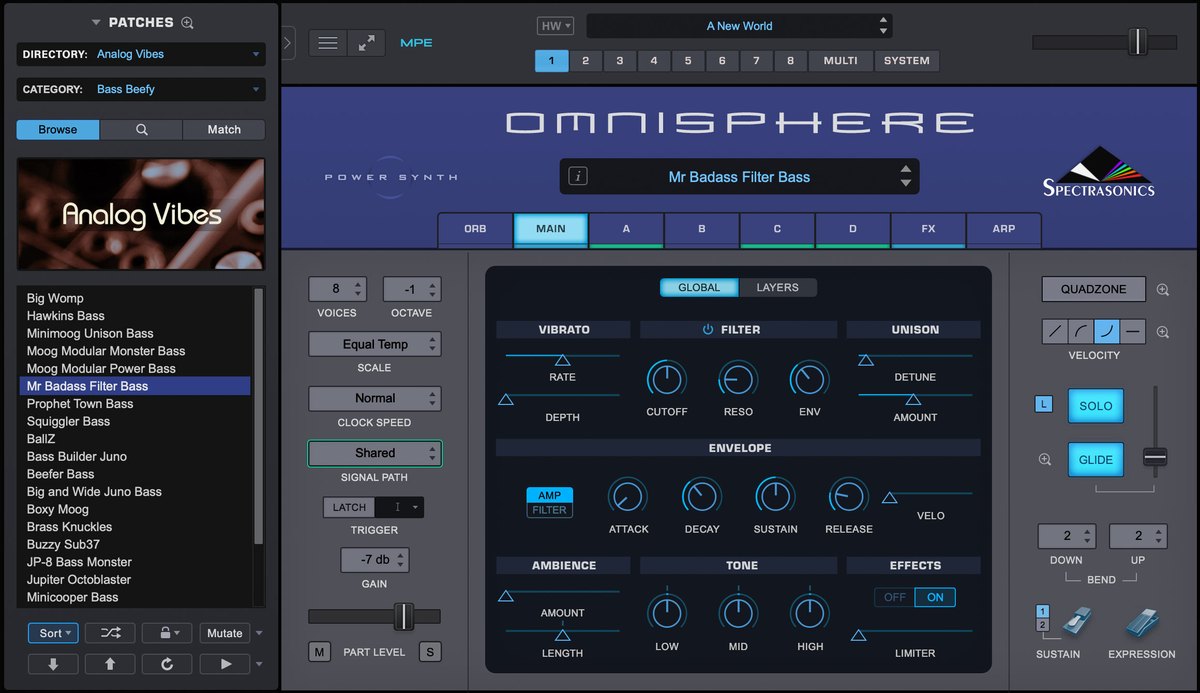 SpectrasonicsOmnisphere 3 | S5.0 | SThousands, 18 libraries | S5+ methods | SVariations + auto-adjust |
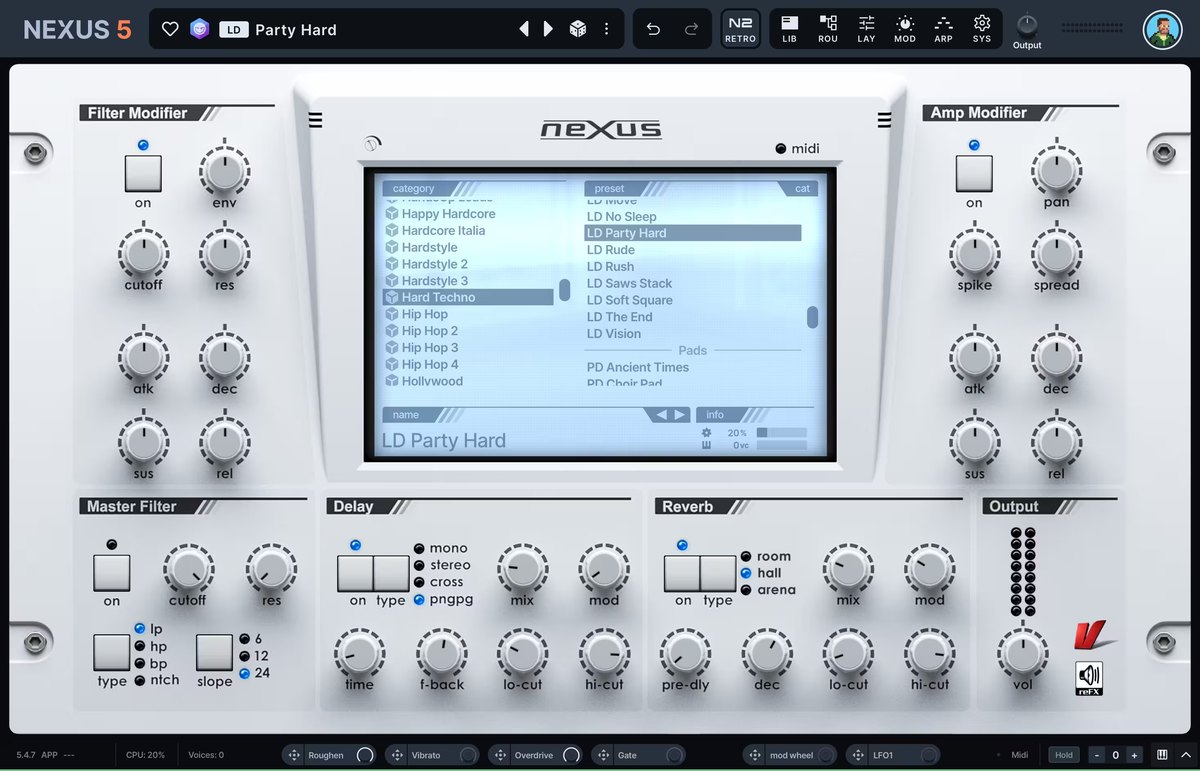 reFXNexus 5 | S4.8 | S5,454 | S8 methods | A4 macros + main-knob screen |
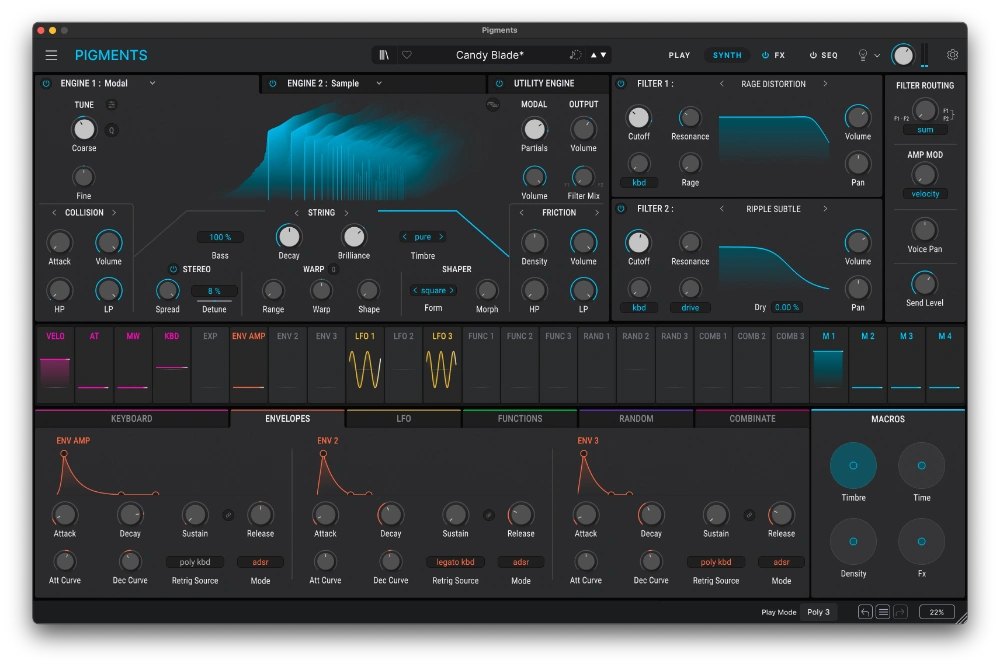 ArturiaPigments | S4.3 | A1,700+ | S6 methods | A4 macros + Play View |
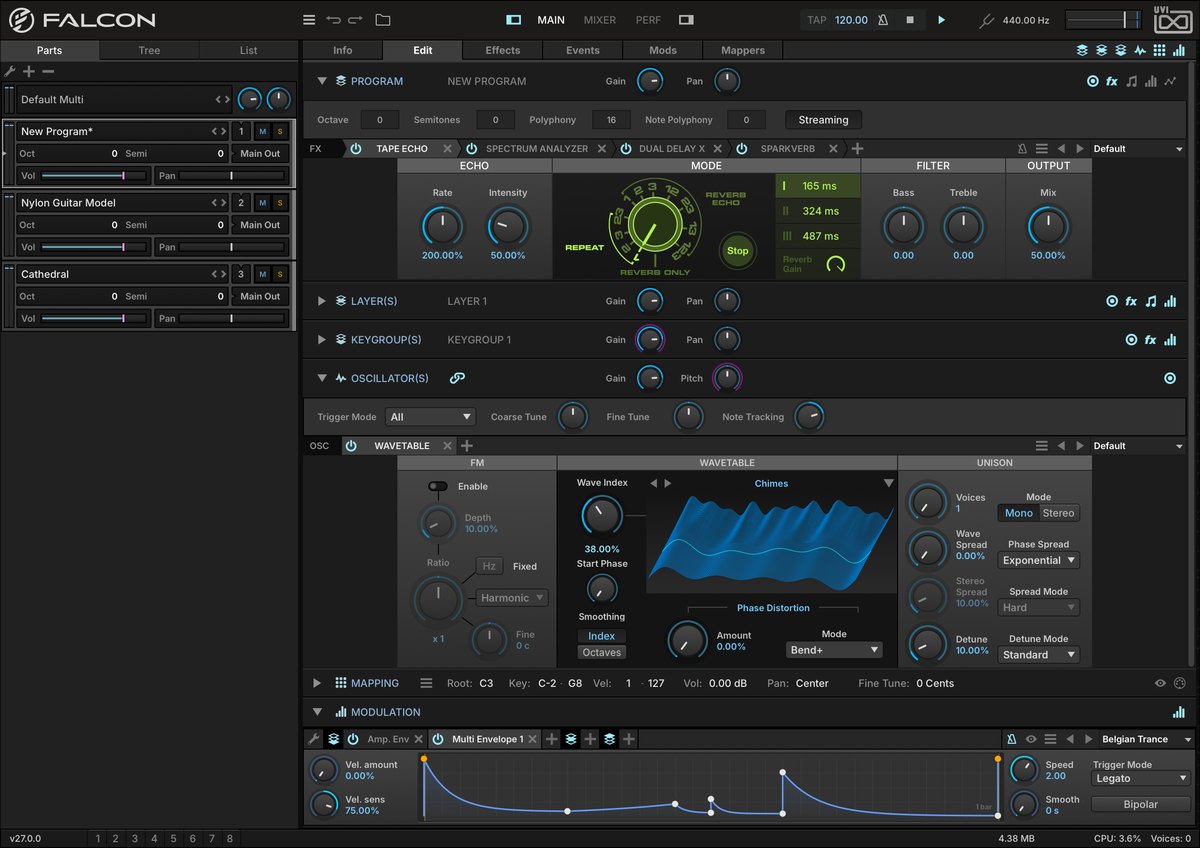 UVIFalcon | S4.3 | A1,700 | S28 oscillator types | AMacros + per-preset screens |
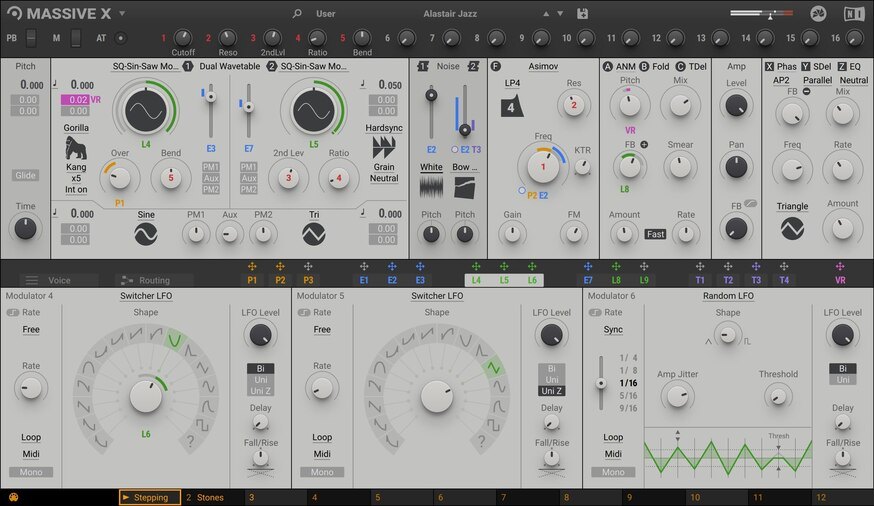 Native InstrumentsMassive X | A4.0 | A780 | BWavetable + free routing | SMorpher, Randomize + macros |
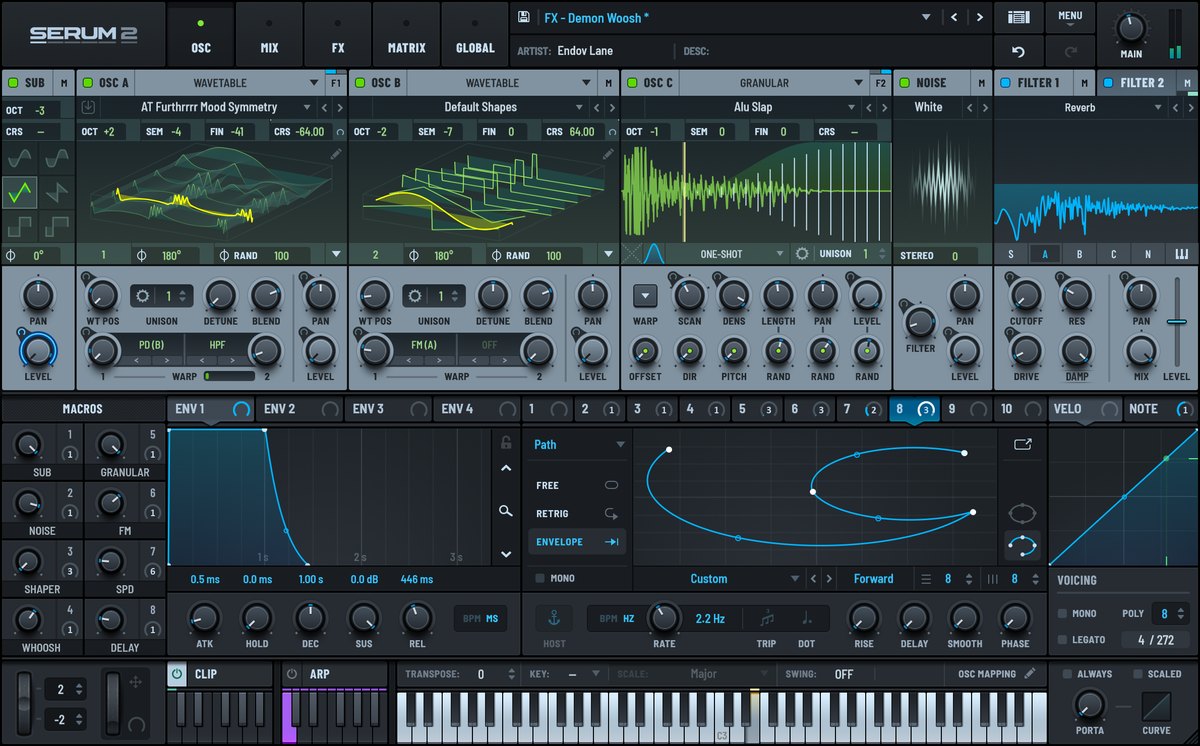 Xfer RecordsSerum 2 | A3.8 | B626+ | S5 oscillator types | A8 macros + Hybridize |
| Reveal SoundSpire | A3.8 | A1,000+ | BSeveral oscillator modes + free routing | ARS AI + 4 macros |
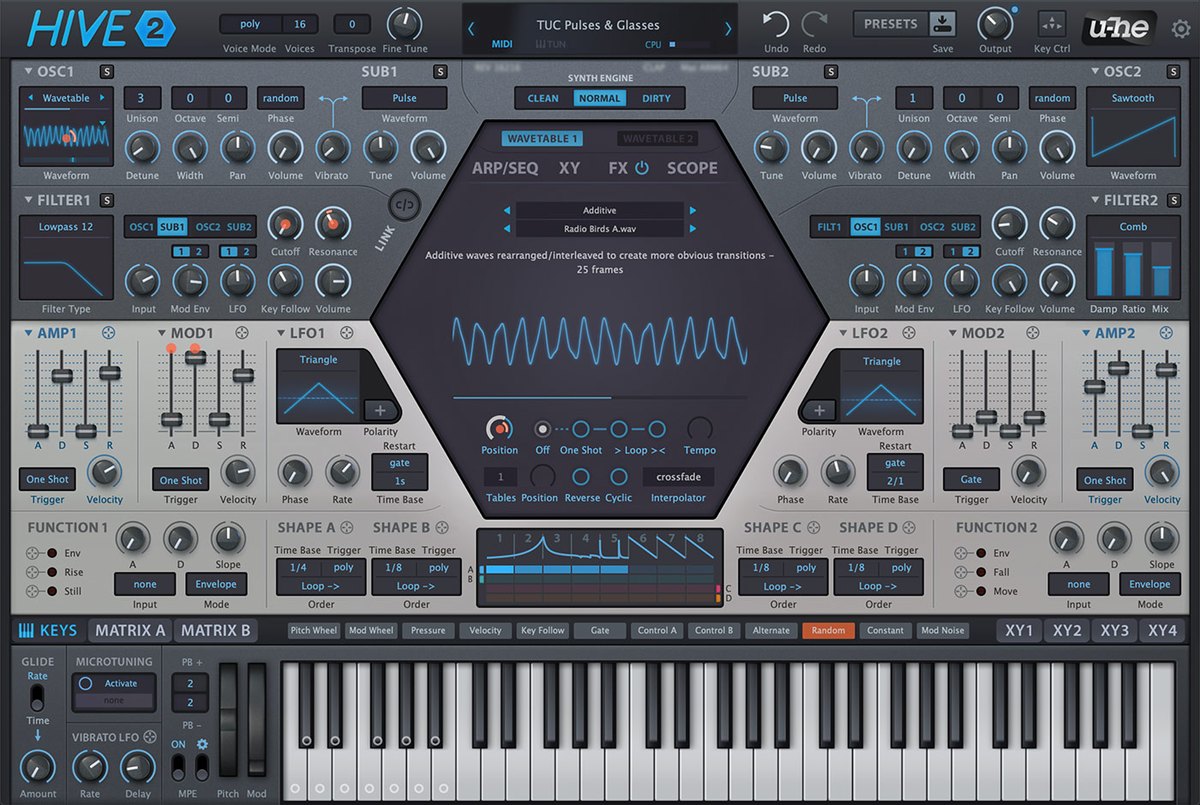 u-heHive 2 | A3.5 | A2,400+ | BStandard waveforms + wavetable | B4 XY pads + panel presets |
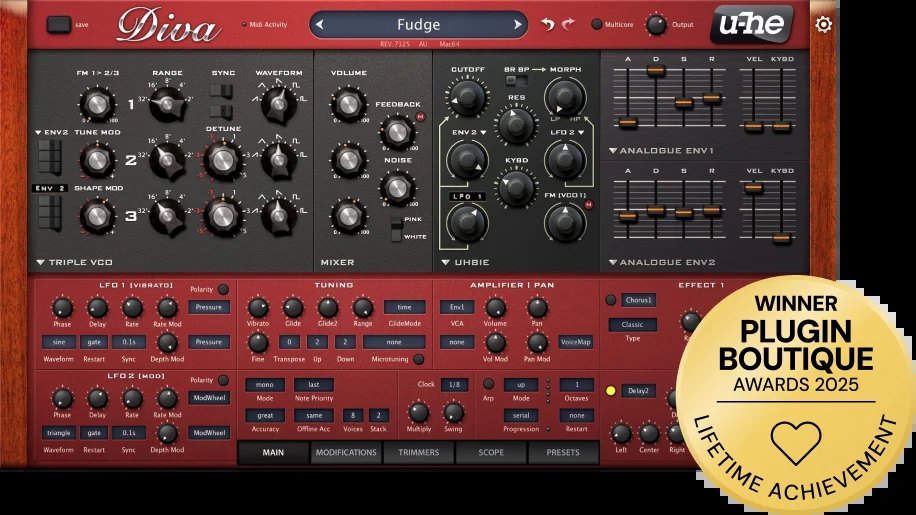 u-heDiva | B3.0 | A1,200+ | CAnalog-style (5 models) | CDetailed, hands-on |
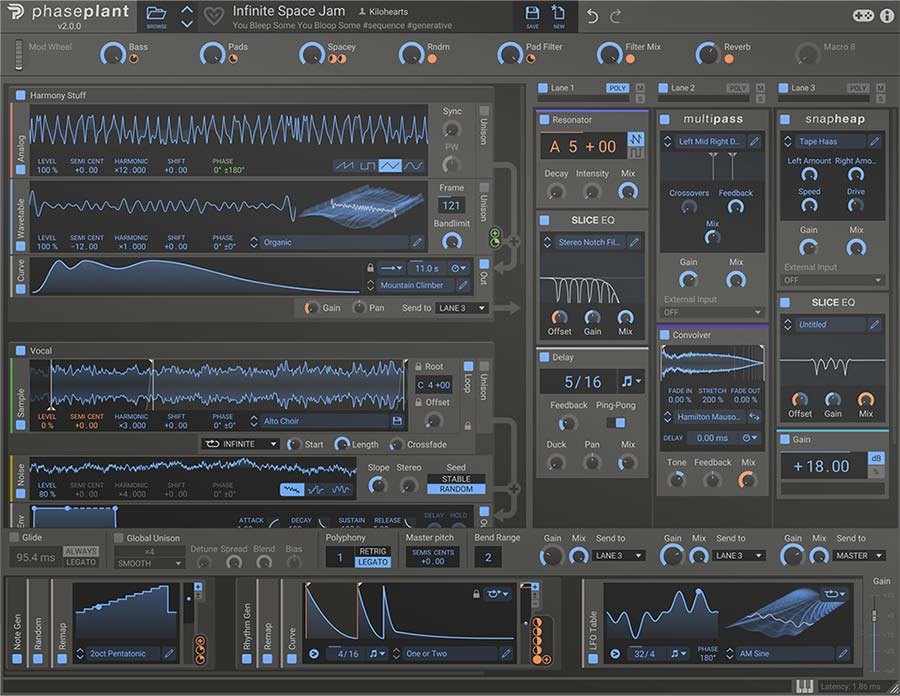 KiloheartsPhase Plant | B3.0 | CNumber not stated | S5 types + FM | B8 macro knobs |
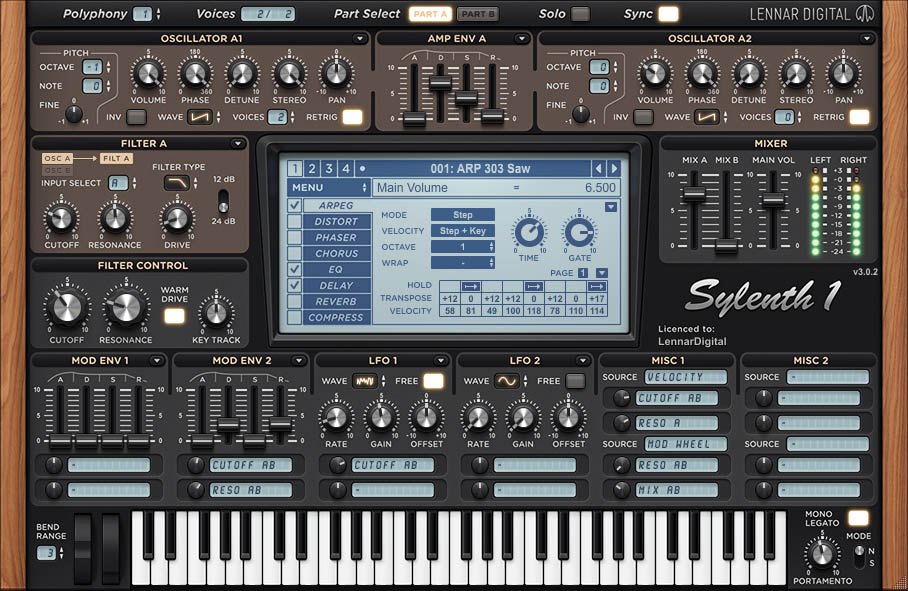 LennarDigitalSylenth1 | B3.0 | A2,500+ | CAnalog-style (1 method) | CArpeggiator |
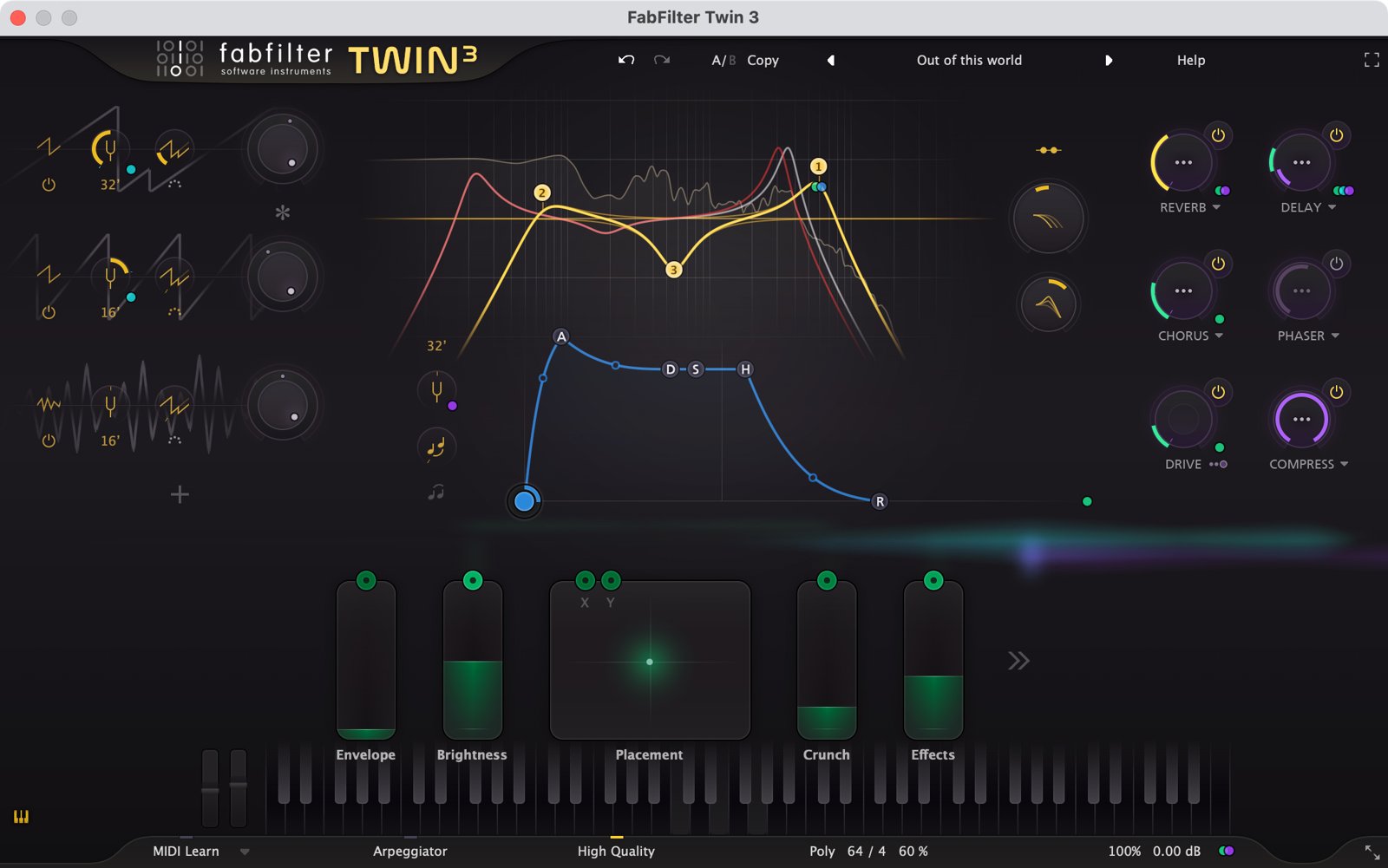 FabFilterTwin 3 | C2.5 | CNumber not stated | CAnalog-style | AClear screen + master knobs |
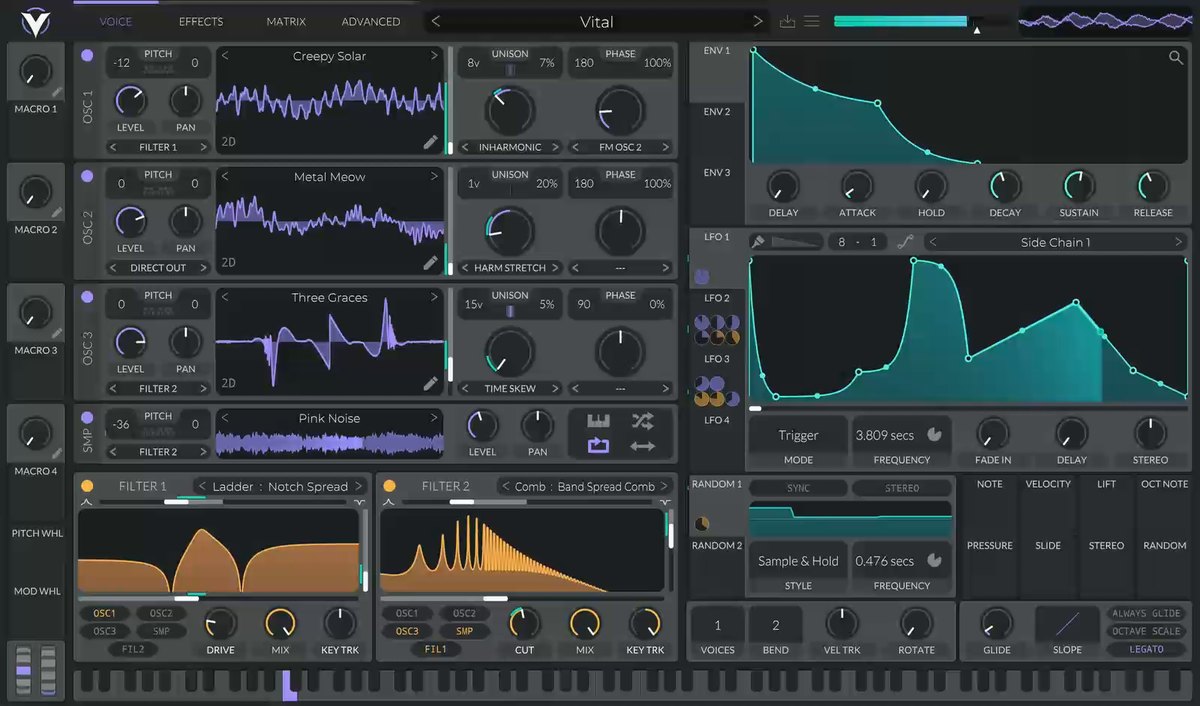 Vital AudioVital | C2.5 | C75 (free version) | BWavetable + morphing | BSounds from text |
Click a column heading to sort by that criterion (click again to reverse). Each cell shows the score (1 to 5) on that criterion as 5 = S, 4 = A, 3 = B, 2 or lower = C. A dash means the criterion is not scored. This is a rating of the manufacturer's official features and specifications, not of sound quality. See How we rate specifications.
Top-scoring products
 Omnisphere 3Rank S
- Nexus 5Rank S
- PigmentsRank S
- Massive XRank A
- Serum 2Rank A
- DivaRank B
- Phase PlantRank B
- Twin 3Rank C
Up to 9 products in order of score. Images are the manufacturers’ official press images or Plugin Boutique images. The overall order and the basis for each rank are in the tier tables above and on each product’s page.
Free ways to start
If you want to try something without spending money, or are looking for your first one, you can start with a product that is free to use. Check the free scope and conditions on each product’s page.
- Vital (rank C, free)
How to choose a synthesizer
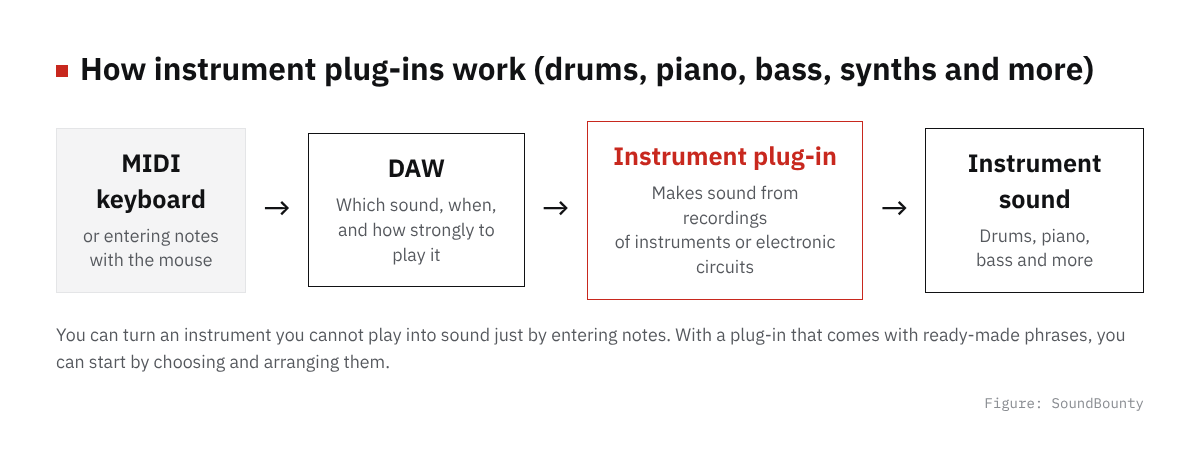
Figure: SoundBounty
Does it have many ready-to-use sounds?
A synth gives you great freedom in sound design, but making a sound from zero is hard. Choosing a product with many presets (sounds) first lets you find a sound that suits the song quickly.
Methods of sound design
Which sounds a synth is good at depends on how it makes sound, such as wavetable, analog-style or granular. If you want to make many kinds of sound in one, a product with several methods is handy.
Can you try a free version?
In this comparison, Vital has a free version and Pigments has a free version, Pigments Play. You can also try for free first and then choose.
A word on each product
Prices in the headings are regular prices in US dollars shown on Plugin Boutique on October 10, 2026. They are not part of the score.
Omnisphere 3 (rank S)
Spectrasonics’ Omnisphere 3 is a large synthesizer with thousands of sounds in 18 libraries. It has “Adaptive Global Controls”, which analyze a sound automatically before they act, and “Patch Mutations”, which make a variation of a sound with one button. It also supports wavetable (a method that makes sound by switching between waveforms of different shapes) and granular synthesis, and can import your own audio.
Nexus 5 (rank S)
reFX’s Nexus 5 is a synthesizer and sound source known for its large number of ready-to-use presets (ready-made settings). The standard edition has 5,454 presets, and there are many genre-specific expansions for EDM, house, hip-hop, lo-fi and more.
Pigments (rank S)
Arturia’s Pigments is a synthesizer with six sound-generation methods: Modal, Granular, Wavetable, Sample, Harmonic and Virtual Analog. It has 68 kinds of filters, 20 kinds of effects and more than 1,700 presets (ready-made settings). There is also a free version with 100 presets, “Pigments Play”.
Falcon (rank S)
UVI’s Falcon is a hybrid instrument with 28 kinds of oscillators (the part that makes the waveform that is the source of the sound) and more than 120 effects. It can layer both sampling and synthesis methods, and it includes 1,700 presets and more than 500 wavetables (a method that makes sound by switching between waveforms of different shapes).
Massive X (rank A, $199)
Native Instruments’ Massive X is a synthesizer centered on wavetable (a method that makes sound by switching between waveforms of different shapes), and its strength is free routing (how the sound is connected). The easy-to-use Play page has Morpher and Animator, which change a sound, and Randomize, which changes it at random, and 16 macro knobs move the important parts together. It has 780 presets (ready-made settings).
Serum 2 (rank A)
Xfer Records’ Serum 2 is a synthesizer with five kinds of oscillators (the part that makes the waveform that is the source of the sound): wavetable (a method that makes sound by switching between waveforms of different shapes), multisample, sample, granular and spectral. It includes more than 626 presets and 288 wavetables, and also has eight macros, an arpeggiator and a clip sequencer.
Spire (rank A)
Reveal Sound’s Spire is a polyphonic synthesizer with four oscillators (the part that makes the waveform that is the source of the sound), known for dance-music sound design. It includes more than 1,000 factory sounds, and has RS AI, which generates presets, four macros and a 15-slot modulation matrix.
Hive 2 (rank A)
u-he’s Hive 2 is a synthesizer known for its clear screen and light operation. Its oscillators (the part that makes the waveform that is the source of the sound) offer standard waveforms and wavetables (a method that makes sound by switching between waveforms of different shapes). It has more than 2,400 presets, a shape sequencer and seven effects whose order you can change.
Diva (rank B, $179)
u-he’s Diva is a synthesizer that recreates classic analog synthesizers. You can combine five kinds of oscillators (the part that makes the waveform that is the source of the sound) and five kinds of filters based on real hardware, and it includes more than 1,200 presets (ready-made settings).
Phase Plant (rank B, $199)
Kilohearts’ Phase Plant is a synthesizer that can use analog-style waveforms, wavetable (a method that makes sound by switching between waveforms of different shapes), sample, granular and noise as sound sources, and lets you build any combination of FM and modulation (changing a sound over time). It comes with a wavetable editing screen and the effects of Kilohearts Essentials.
Sylenth1 (rank B)
LennarDigital’s Sylenth1 is a virtual-analog synthesizer with four oscillators (the part that makes the waveform that is the source of the sound) and two filters. It comes with more than 2,500 presets, an arpeggiator and seven built-in effects, and the manufacturer explains that it is built to keep the CPU load low.
Twin 3 (rank C, $149)
FabFilter’s Twin 3 is an analog-style synthesizer with four oscillators (the part that makes the waveform that is the source of the sound). It has analog-style wobble (drift), 100 slots of modulation (changing a sound over time) and a preset browser you can search by tags, and its screen has been redesigned to be easy to understand.
Vital (rank C)
Vital Audio’s Vital is a synthesizer that can reshape wavetables (a method that makes sound by switching between waveforms of different shapes) from the side of their spectrum. You can make wavetables from your own samples or from text, and its strength is that the movement is easy to see on the screen. Even the free version has all the synthesizer’s features, and there are 75 presets (ready-made settings) (250 in Plus and more than 400 in Pro).
Frequently asked questions
Q. Do I need a synth for cover songs?
If you make the backing track yourself, you use one often for pads and bass. If you use a backing track that was provided, you do not need one.
Q. Is it cheating to use presets?
No. Professionals also often use presets as a starting point. Adjusting one a little to suit the song makes it your own sound.
Q. Is it heavy on the computer?
A synth’s load changes with the number of notes sounding at once and the settings. It is reassuring to try a trial version on your own computer.
How we score
How we score (Synthesizers)
| Criterion | Basis | 5 pt | 4 pt | 3 pt | 2 pt | 1 pt |
|---|---|---|---|---|---|---|
| Ready-to-use sounds | Number of presets (ready-made sounds) stated on the official page | Thousands or more | 700 or more | 400 or more | Fewer than 400, or no number stated | — |
| Range of sound design | Number of sound-generation methods (ways of making sound) you can use | 5 or more methods | 3 to 4 methods | 1 to 2 methods, with highly flexible routing and modulation | One method, such as analog-style | — |
| Help with sound design | Features that let you change a sound without detailed knowledge | Both a feature that changes sounds automatically and knobs that adjust many things at once | One of them, plus another aid | Either one, or a simplified screen | Not mentioned on the official page | — |
Each criterion is scored from 1 to 5 on how well the product serves one goal: quickly preparing sounds that suit your own songs or cover-song backing tracks in a home studio. Scores follow the conditions in the table above, and the rank is based on an average in which "Ready-to-use sounds" counts double. The basis is official manufacturer information, and the number of presets is the number written on the official page (products that do not state it get a lower score). Sound quality and CPU load are not measured, so they are not scored; reviews from trade magazines are introduced in the articles for reference. Price is not part of the score. Features that cannot be confirmed from the manufacturer's or a retailer's description are scored as if absent.
The thinking behind scores and ranks is summarized in How we rate specifications. We add products in order.
More comparisons
For free options
Pages about free products in this category: