
Disclosure: This page may contain affiliate links. Prices were checked on the date shown and may change.
An introduction to Shure MV7X, based on information from the maker and distributors: what it does, how to use it and who it may suit. It is not scored.
The Shure MV7X is a professional-quality dynamic microphone, ideal for close mic applications that require vocal intelligibility with a balanced tone.
— Shure official site
What is MV7X?
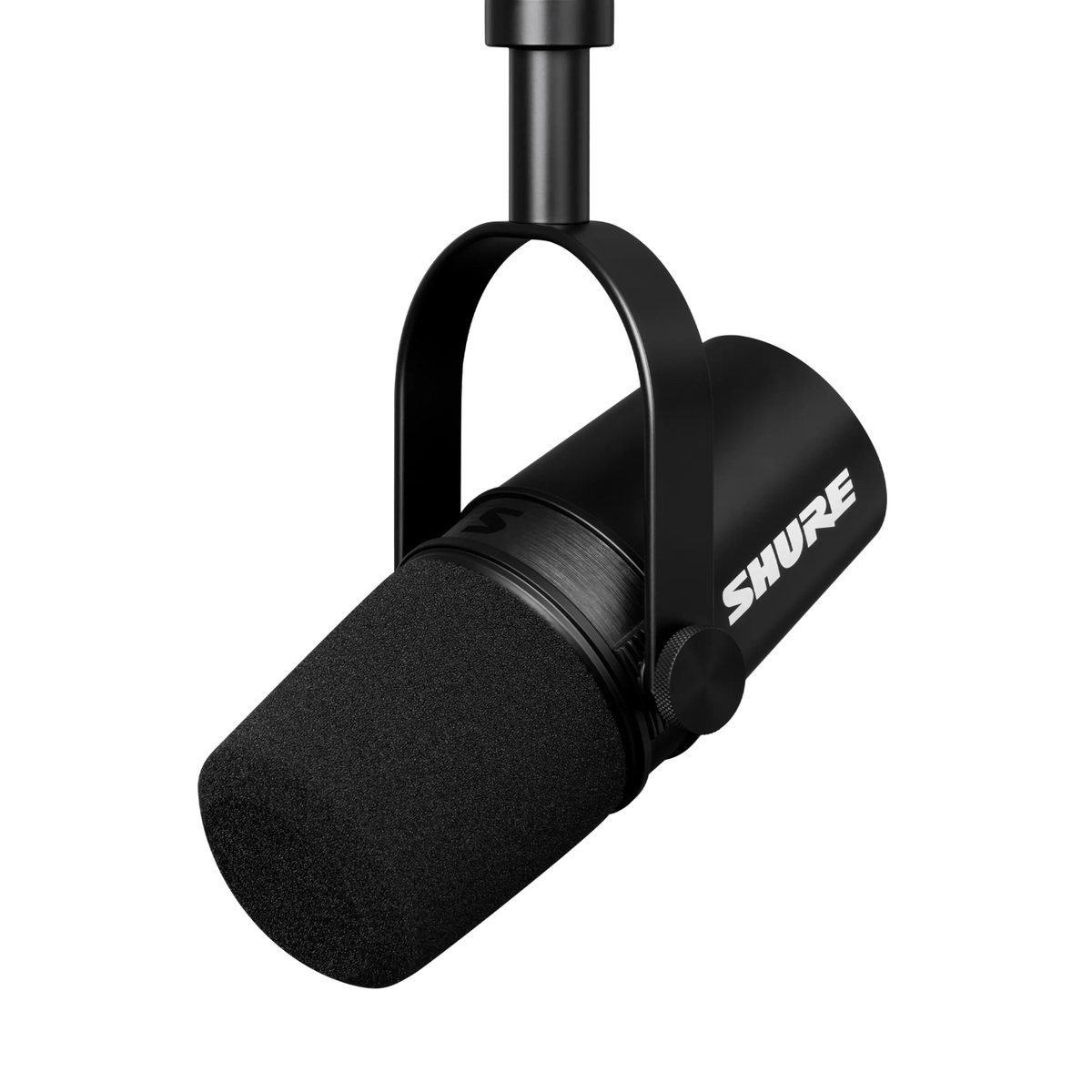
The MV7X is a dynamic podcast microphone from Shure. It was designed for podcasters and vocalists, and the company says it is intended for close-up recording that needs clear, balanced voice capture.
It adopts Voice Isolation Technology from its older sibling, the MV7. According to Shure, a highly directional cardioid pattern, excellent rear rejection and a shock mount are combined to avoid capturing background noise other than your voice. It is meant for recording in rooms that are not acoustically ideal.
The output is XLR only, with no USB connection. Shure says it is compatible with almost any audio interface without needing additional gain. It shares the form factor of the legendary SM7B and is positioned as a more affordable alternative.
The housing is all metal with an adjustable yoke that fits 5/8-inch-27 stands. A windscreen and a thread adapter are included. It is presented as an option for multi-mic podcasts on a budget where you want to use the same microphone for everyone.
Key features
Voice Isolation Technology
This combines a dynamic cartridge, a tight cardioid pattern, rear rejection and a shock mount. It aims to focus on your voice and pick up less background noise such as air conditioners or computer fans.
XLR output for direct interface connection
The output is a passive XLR for mixers and interfaces. Shure says it works with almost any interface without additional gain. As a dynamic mic, it does not need phantom power.
Response tuned for speech
The frequency response is 50 to 16,000 Hz, sensitivity is -55 dBV/Pa (1.78 mV) and output impedance is 252 ohms. Shure says it is optimised for spoken word.
Rugged SM7B-style body
The all-metal housing is designed to protect the cartridge. Loosening the yoke lets you change the angle, and the 5/8-inch-27 thread fits stands or boom arms. It weighs 0.55 kg.
Windscreen included
Shure says the windscreen offers protection from plosives and creates a warmer, more intimate sound for speech such as podcasting and gaming. A black replacement windscreen is available.
For multi-mic podcasts
Shure presents it as a way to run multi-microphone podcasts on a modest budget. Buying the same mic for each guest helps keep the sound consistent between speakers.
Sharing DNA with the MV7
Shure describes it as the youngest member of the 7 family, sharing DNA with the SM7B. Unlike the MV7, which can also use USB, the MV7X is XLR-only.
Specifications
| Item | Details |
|---|---|
| Transducer type | Dynamic (moving coil) |
| Polar pattern | Unidirectional (cardioid) |
| Output impedance | 252 ohms |
| Frequency response | 50 to 16,000 Hz |
| Sensitivity | -55 dBV/Pa (1.78 mV, at 1 kHz, open circuit) |
| Housing | All metal construction |
| Mounting | 5/8-27 thread mount |
| Net weight | 0.55 kg (1.21 lbs) |
What is included and system requirements
- MV7X podcast microphone
- Windscreen
- 5/8-inch to 3/8-inch thread adapter (brass adapter)
- Sold separately: foam windscreen (AMV7+WS), replacement windscreen (AMV7-K-WS)
How to use it
- Attach the mic and yoke to a stand with the 5/8-inch thread; use the adapter for a 3/8-inch stand.
- Loosen the yoke knobs to adjust the angle, then tighten again, being careful not to unscrew them completely.
- Fit the windscreen as needed.
- Connect the mic to an audio interface or mixer with an XLR cable.
- Phantom power is not required for a dynamic mic.
- Speak close to the mic, with the front (logo side) facing your mouth.
- Raise the interface gain while speaking to find a suitable level.
- Make a test recording to check how background noise comes through, and adjust aim and distance.
Where it may come in handy
Podcast recording
This is the use Shure has in mind. It is meant for home recording where the room is not necessarily quiet, with an approach that reduces background noise.
Game commentary and streaming
The windscreen is described for speech uses such as gaming. You may put it on a desk boom arm.
Narration and reading
It is designed for clear close-up voice recording, so you could consider it for video explanations and narration. The 50 to 16,000 Hz response leans toward the voice range.
Guide vocals
Shure says it was made for vocalists as well. Trying it for rough vocal takes is possible.
Who it may suit
- People looking for an XLR dynamic mic for podcasts or streaming
- People who already own an audio interface
- People who cannot treat their room acoustically and want to reduce background noise
- People who want to match the same mic across several speakers
Good to know before you buy
- It is XLR-only with no USB, so you need an audio interface or mixer.
- The official US page lists $199.
- A bundle with a boom arm ($303.04) is also offered on the official page.
How it differs from similar products
We do not pick a winner; the official figures are placed side by side.
SM4
The MV7X is a dynamic with a 50 to 16,000 Hz response, -55 dBV/Pa sensitivity and 0.55 kg weight. The SM4 is a condenser with a 20 to 20,000 Hz response, -38 dBV/Pa sensitivity, 463 g and needs 48 V phantom power.
Price
$199 (Shure official site, checked 2026-10-27). Prices can vary by region and promotion, so check the official page before buying.
More of the same kind
We have introduced 100 microphones. Here are some of the others.
- Yamaha YDM707
- RODE NT1 5th Generation
- Sennheiser MKH 416
- Austrian Audio CC8-SC
- Earthworks SR25
- Earthworks SR25mp Gen 2
We have introduced 6 other products from Shure.
For a side-by-side comparison scored on the same criteria, see our comparison of microphones.
See the full list in Product database: Microphones and accessories.
Sources: shure.com (checked 2026-10-27)









Comments