
A bass instrument is a plug-in that plays the sound of a bass on a computer. When you add bass to the backing track of your own song or a cover, you can program it by MIDI without actually playing. Bass is the foundation of a song, so not only realism but also “can you quickly make a phrase that suits the song” matters. On this page that speed is weighted most.
This list compares 10 bass instrument plug-ins on 3 criteria: ease of making basslines, range of tones, playing detail. Scores are decided by how well each product serves its purpose, using the conditions for each criterion, and the basis is official manufacturer information. Price is not part of the score.
Disclosure: This page contains affiliate links. If you buy through them, SoundBounty may earn a commission at no extra cost to you. Prices are as of the date checked and can change.
Picks by purpose
- If you want to add bass quickly without being able to play it: EZbass (rank S). It automatically makes a fitting bass line from the song’s MIDI or audio.
- If you want to craft the sound and playing style: MODO BASS 2 (rank A). 22 basses, with the detail to even change the strings and plucking position.
- If you want to use the standard electric bass through patterns: Prime Bass (rank A). 355 playing patterns you can use as they are.
- If you also want upright and synth bass in one: Trilian (rank B). Acoustic, electric and synth basses in one.
Tier list by rank
Ranks are based on the manufacturer's official features and specifications, not on sound quality. Within a row, products are ordered by score. The basis is explained in How we rate specifications.
Tier table by criterion
Products with the same overall rank can have different strengths. Click a column heading to sort by the rank on that criterion, and use it when you choose by the feature you want.
| Product | Overall | Ease of making basslinesWhether you can quickly get a phrase that suits the song | Range of tonesKinds and number of basses included | Playing detailWhether you can change playing techniques and details of the performance |
|---|---|---|---|---|
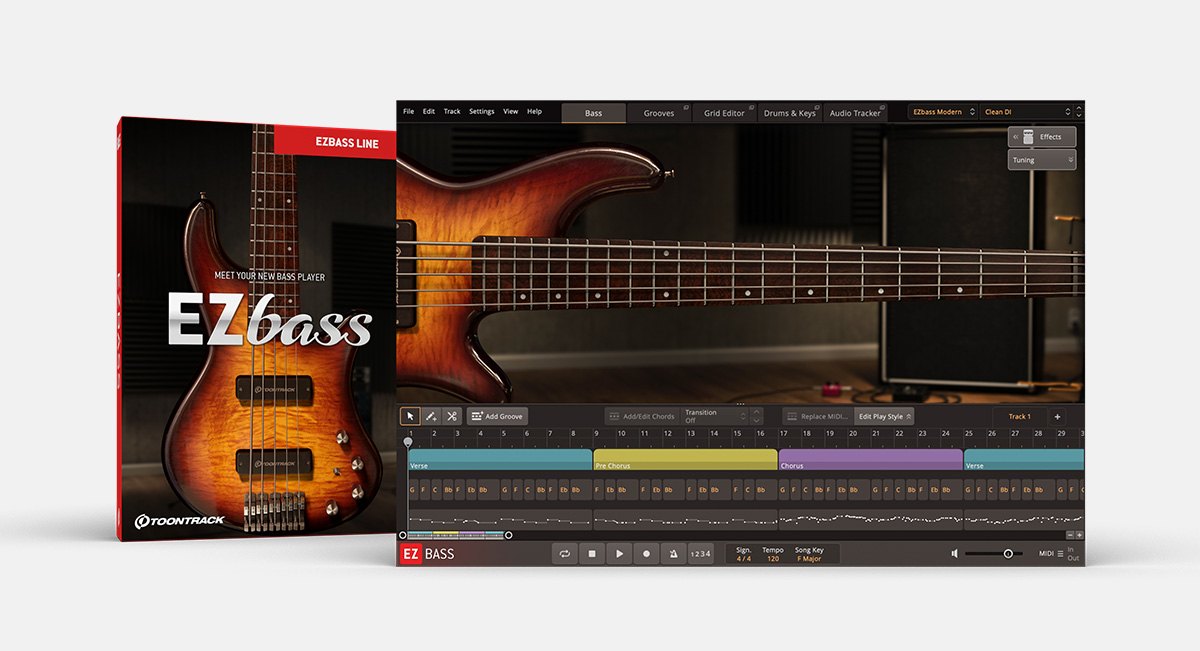 ToontrackEZbass | S4.3 | SAutomatic from MIDI or audio | B2 basses | AFingers, pick, slap |
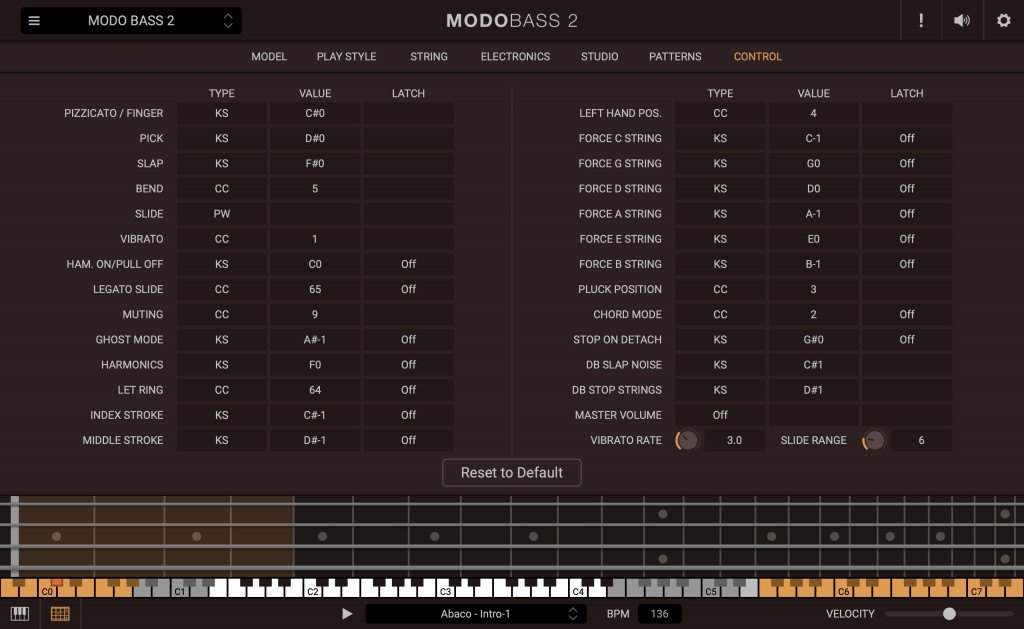 IK MultimediaMODO BASS 2 | A4.0 | BPattern feature | S22 basses | STechniques + strings and position |
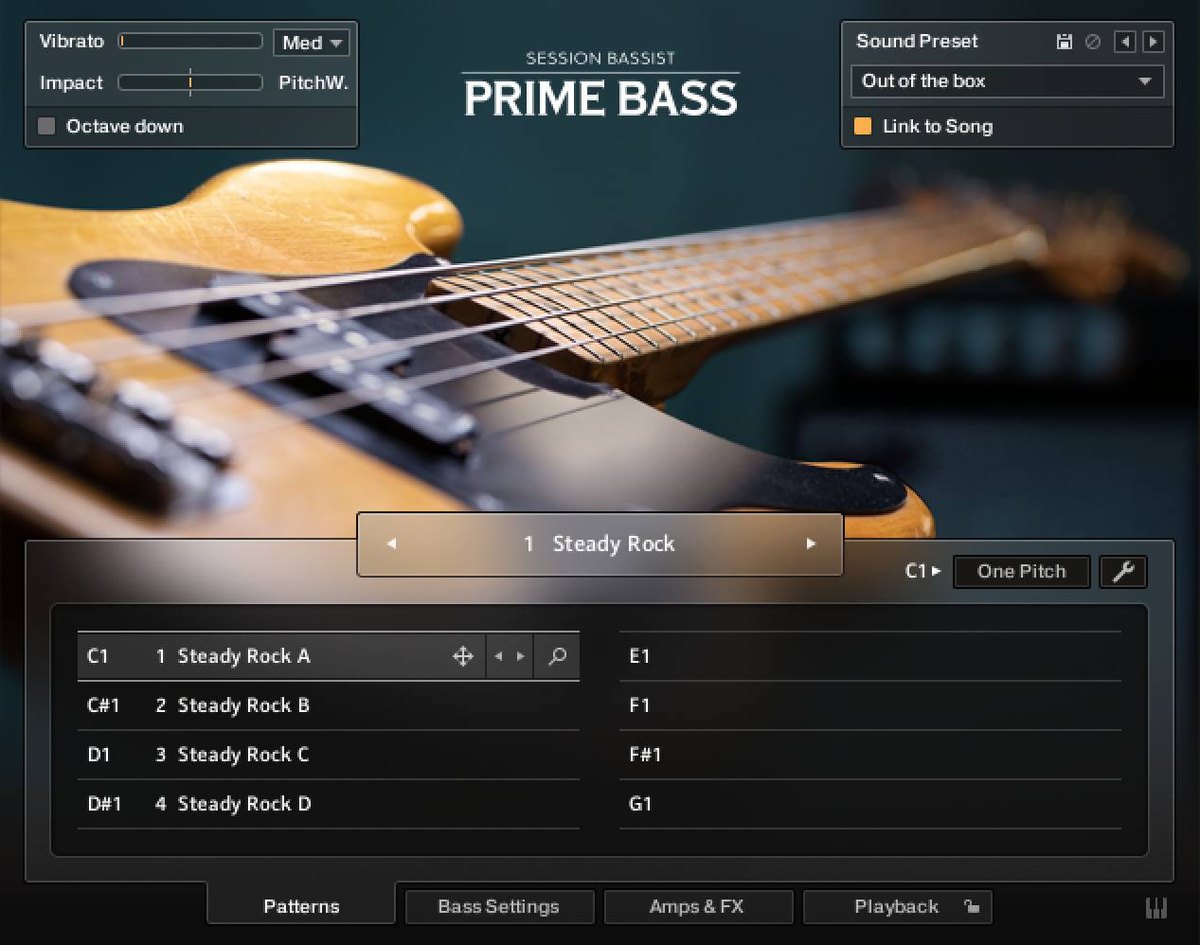 Native InstrumentsPrime Bass | A3.5 | A355 patterns | C1 bass | AFingers, pick, slap and more |
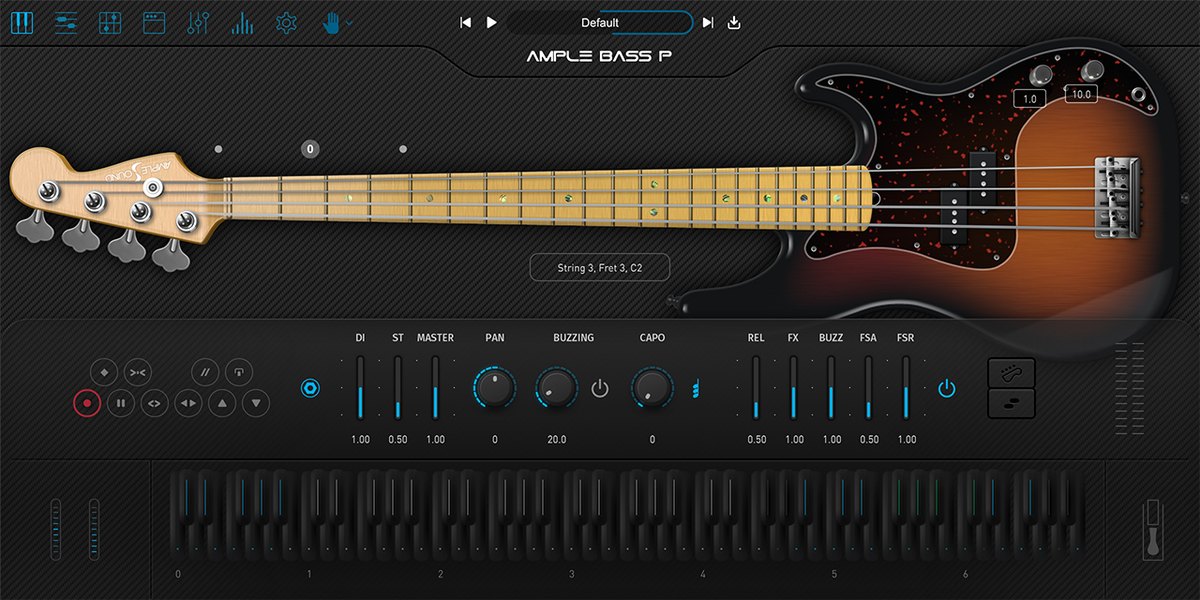 Ample SoundAmple Bass P | A3.5 | AHundreds of riffs | C1 bass | A13 techniques |
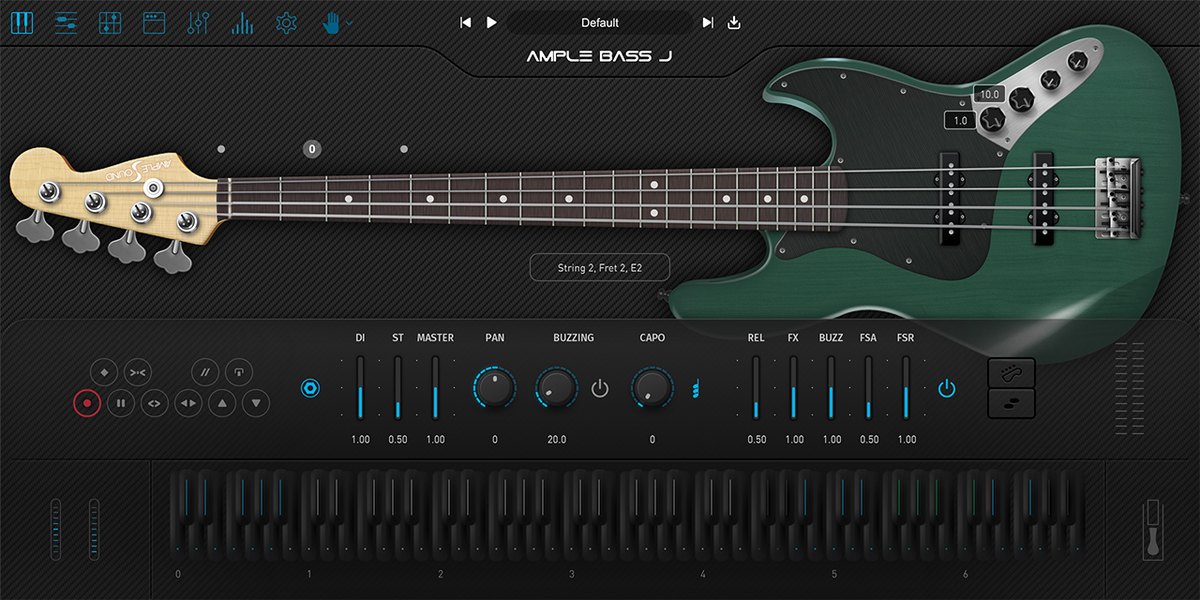 Ample SoundAmple Bass J | A3.5 | AHundreds of riffs | C1 bass | A13 techniques |
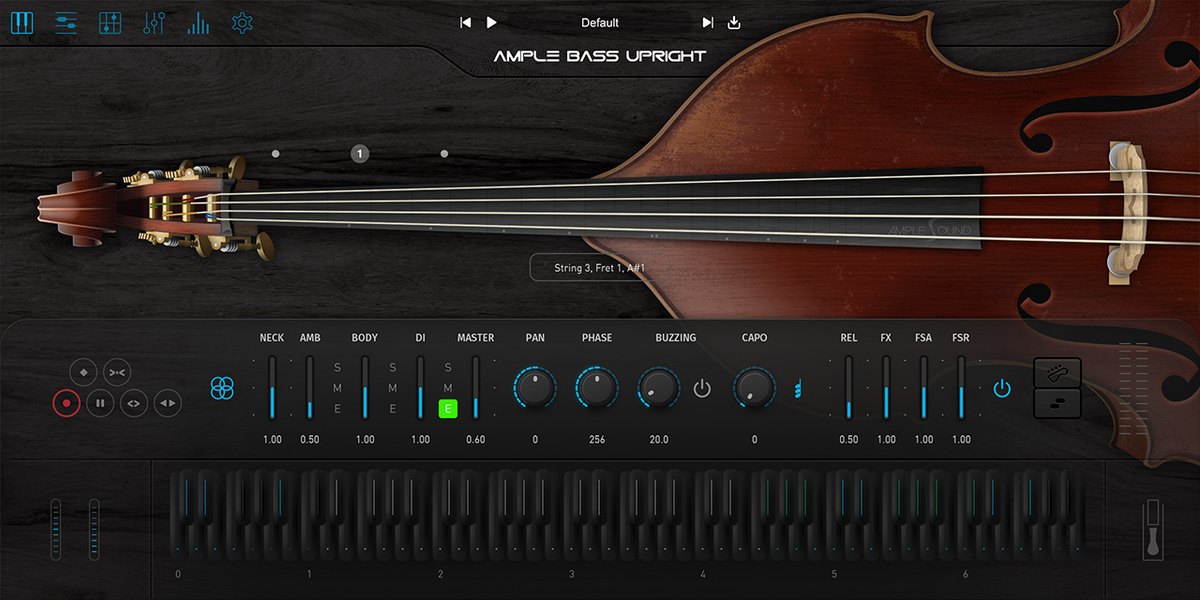 Ample SoundAmple Bass Upright | A3.5 | AHundreds of riffs | C1 bass | A13 techniques |
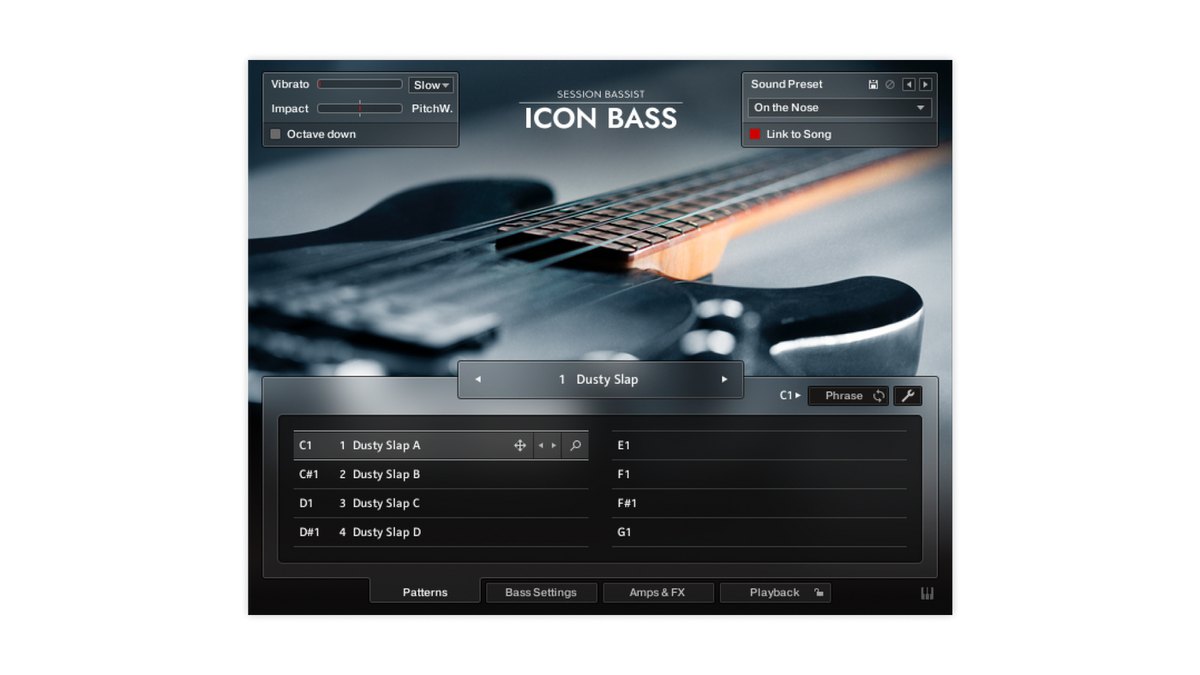 Native InstrumentsIcon Bass | A3.5 | A208 patterns | C1 bass | AFingers, pick, slap and more |
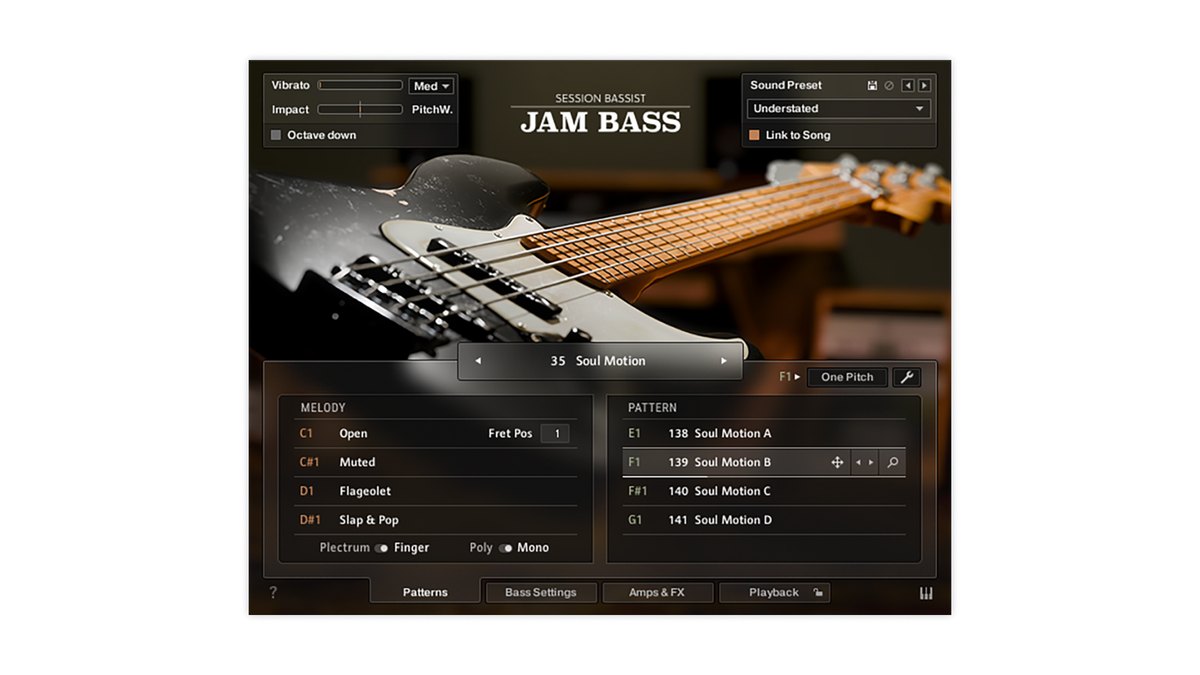 Native InstrumentsJam Bass | A3.5 | A283 patterns | C1 bass | AFingers, pick, slap and more |
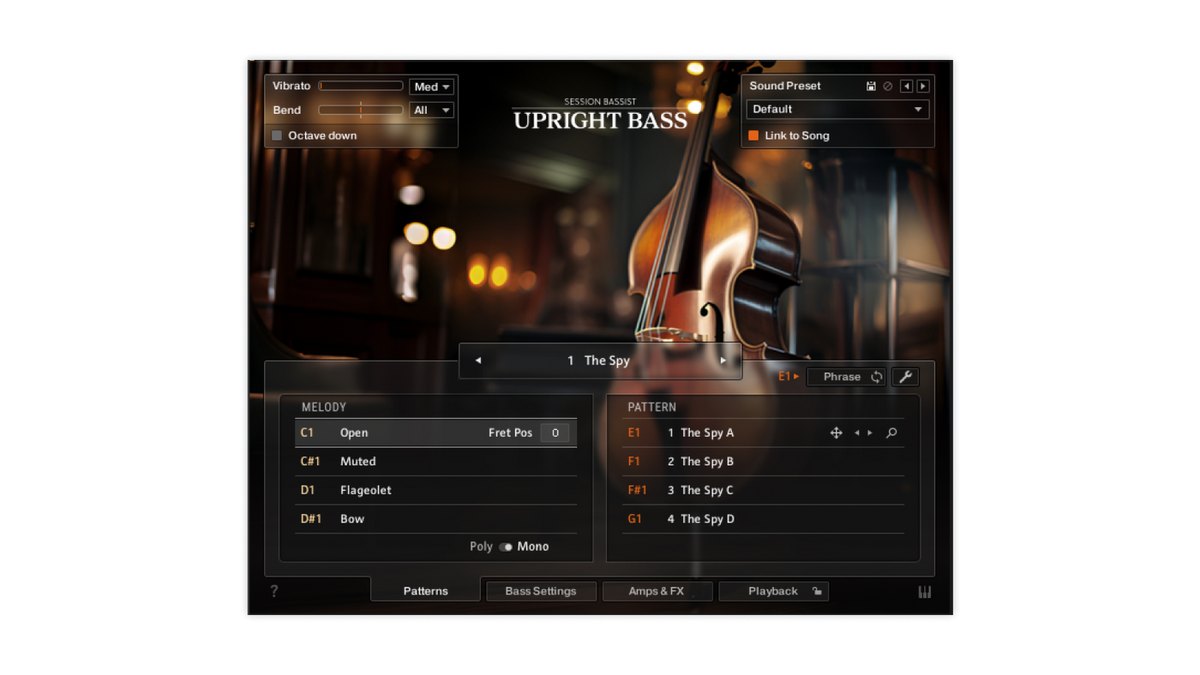 Native InstrumentsSession Bassist Upright | A3.5 | A224 patterns | C1 bass | AOpen, muted, bowed and more |
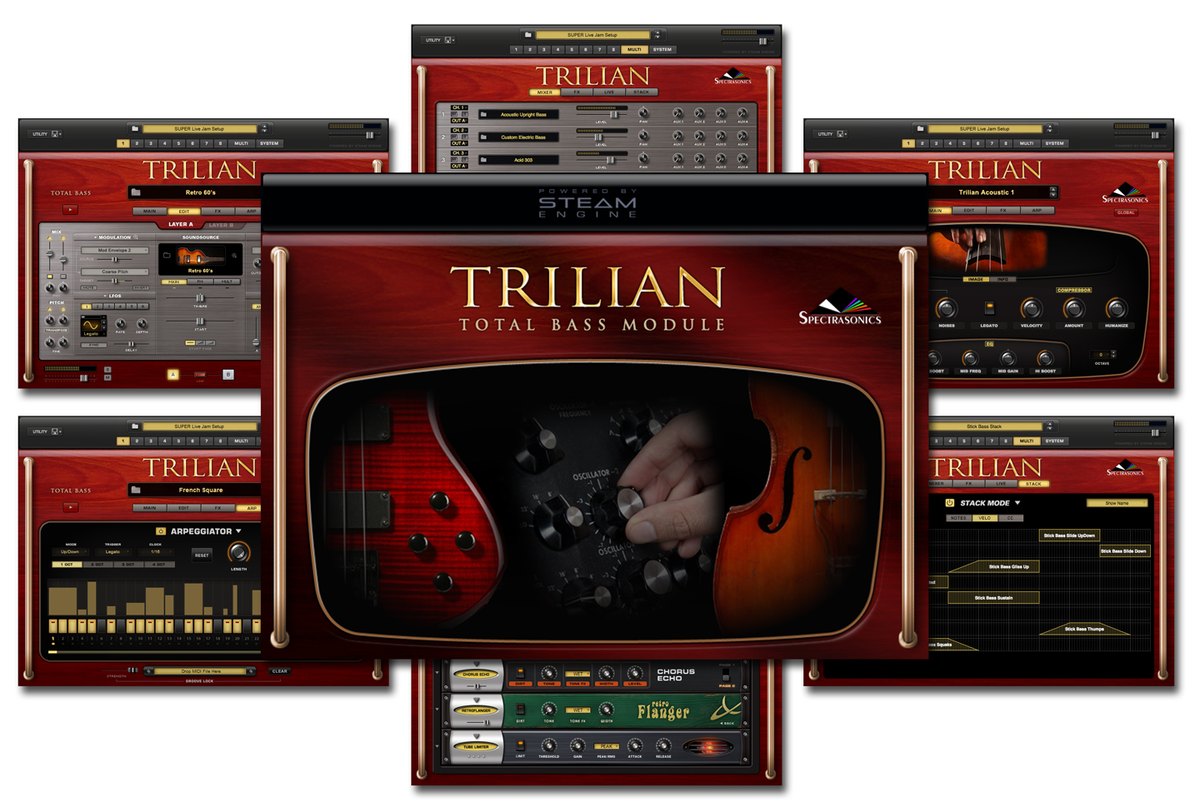 SpectrasonicsTrilian | B3.3 | BArpeggiator | AAcoustic, electric, synth | BLegato, glide |
Click a column heading to sort by that criterion (click again to reverse). Each cell shows the score (1 to 5) on that criterion as 5 = S, 4 = A, 3 = B, 2 or lower = C. A dash means the criterion is not scored. This is a rating of the manufacturer's official features and specifications, not of sound quality. See How we rate specifications.
Top-scoring products
Up to 9 products in order of score. Images are the manufacturers’ official press images or Plugin Boutique images. The overall order and the basis for each rank are in the tier tables above and on each product’s page.
How to choose a bass instrument plug-in
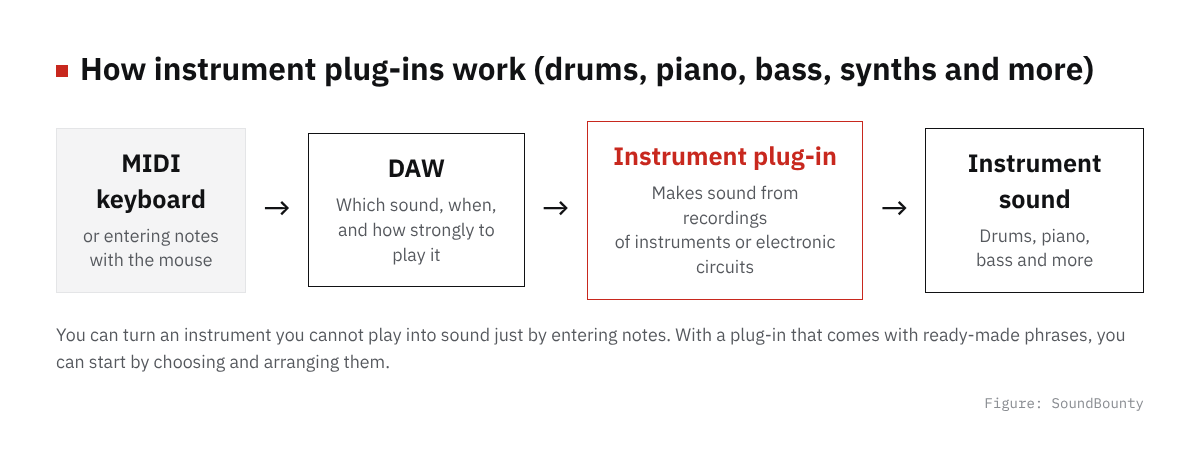
Figure: SoundBounty
Can you make a bass line quickly?
If you cannot play bass, a product that automatically makes a bass line to fit the chords and drums of the song, or one with many playing patterns, is handy.
The kind of bass you want
The kinds of bass included, such as electric bass, upright bass and synth bass, differ by product. Choose one that suits the song you want to make.
Detail of playing styles
If you can change the way it is played, such as fingerstyle, pick and slap, it sounds more real. If you want to craft it in detail, compare this point too.
A word on each product
Prices in the headings are regular prices in US dollars shown on Plugin Boutique on October 10, 2026. They are not part of the score.
EZbass (rank S)
Toontrack’s EZbass is a bass instrument plug-in with two basses, vintage and modern. It has features for adding bass quickly: it automatically makes a fitting bassline from drum or keyboard MIDI (MIDI: performance data that says which note was played and how hard), converts recorded audio into MIDI, and offers “Tap2Find”, which finds a close phrase from a rhythm you tap.
MODO BASS 2 (rank A, $199.99)
IK Multimedia’s MODO BASS 2 is a bass instrument plug-in that does not use recorded sound but recreates the way a bass is played by calculation (physical modeling). It includes up to 22 basses, including upright and fretless, and lets you change strings, neck, body, pickups, playing technique and even where the string is plucked. It also has a playing-pattern feature.
Prime Bass (rank A, $99)
Native Instruments’ Prime Bass is a bass instrument plug-in with one 70s-style electric bass. It has 355 playing patterns and phrases for 81 songs, and you can drag and drop the MIDI (MIDI: performance data that says which note was played and how hard) into your DAW (the software you make music in). Amps and effects are included, and it runs on the free KONTAKT PLAYER.
Ample Bass P (rank A)
Ample Sound’s Ample Bass P is a bass instrument plug-in that plays an electric bass based on the Fender Precision Bass. It includes two libraries, finger and pick, and 13 playing techniques, and comes with Riffer 4, a MIDI editor that supports tablature.
Ample Bass J (rank A)
Ample Sound’s Ample Bass J is a bass instrument plug-in that plays an electric bass based on the Fender Jazz Bass (a John English Masterbuilt). It includes two libraries, finger and pick, and 13 playing techniques, and comes with Riffer 4, a MIDI editor that supports tablature.
Ample Bass Upright (rank A)
Ample Sound’s Ample Bass Upright is a bass instrument plug-in that plays an upright bass, often used in jazz and blues. It includes a finger library and 13 playing techniques, and comes with Riffer 4, a MIDI editor that supports tablature.
Icon Bass (rank A)
Native Instruments’ Icon Bass is a bass instrument plug-in with one American electric bass made in 1989. It has 208 playing patterns and presets for 54 songs, and you can drag and drop the MIDI (MIDI: performance data that says which note was played and how hard) into your DAW (the software you make music in). It runs on the free KONTAKT PLAYER.
Jam Bass (rank A)
Native Instruments’ Jam Bass is a bass instrument plug-in with one American electric bass with dual pickups. It has 283 playing patterns and presets for 71 songs, and you can drag and drop the MIDI (MIDI: performance data that says which note was played and how hard) into your DAW (the software you make music in). It runs on the free KONTAKT PLAYER.
Session Bassist Upright (rank A)
Native Instruments’ Session Bassist Upright Bass is a bass instrument plug-in with one upright bass made in Germany in the 1970s. It has 224 playing patterns and presets for 54 songs, and can be used for jazz, blues and pop as well. It runs on the free KONTAKT PLAYER.
Trilian (rank B)
Spectrasonics’ Trilian is a 34 GB bass instrument plug-in that combines acoustic bass, electric bass and synth bass in one. It records playing techniques such as legato (a way of playing that joins notes smoothly) and glide in detail, and you can change the sound with the same sound-design features as Omnisphere.
Frequently asked questions
Q. Can I use one if I cannot play bass?
Yes. You can make a part by lining up patterns or programming with the mouse.
Q. How is it different from the bass that comes with a DAW?
You can make songs with the bundled ones too. A dedicated instrument differs in the realism of the sound, the playing patterns and the detail of playing styles.
Q. Is bass hard to hear on small speakers?
Low sounds can be hard to hear on small speakers and earphones. Decide the volume while checking on headphones and other devices too.
How we score
How we score (Bass instrument plug-ins)
| Criterion | Basis | 5 pt | 4 pt | 3 pt | 2 pt | 1 pt |
|---|---|---|---|---|---|---|
| Ease of making basslines | Whether you can quickly get a phrase that suits the song | Can automatically make a fitting bassline from the MIDI or audio of a song | Hundreds of playing patterns you can use as they are | Has playing patterns (number not stated) | No patterns mentioned | — |
| Range of tones | Kinds and number of basses included | 20 or more (including upright bass and others) | Several kinds, such as acoustic, electric and synth | 2 to 3 | 1 | — |
| Playing detail | Whether you can change playing techniques and details of the performance | Besides techniques, you can change the strings and where the string is plucked | Several techniques, such as fingers, pick and slap | Techniques such as legato are included (few kinds stated) | Not mentioned | — |
Each criterion is scored from 1 to 5 on how well the product serves one goal: quickly adding a realistic bass to your own songs and cover-song backing tracks. Scores follow the conditions in the table above, and the rank is based on an average in which "Ease of making basslines" counts double. The basis is official manufacturer information. How realistic the sound is has not been compared by ear, so it is not scored. Price is not part of the score. Features that cannot be confirmed from the manufacturer's or a retailer's description are scored as if absent.
The thinking behind scores and ranks is summarized in How we rate specifications. We add products in order.