
Disclosure: This page may contain affiliate links. Prices were checked on the date shown and may change.
An introduction to GForce Software Oberheim OB-1, based on information from the maker and distributors: what it does, how to use it and who it may suit. It is not scored.
In 1978, Tom Oberheim built the world's first programmable monophonic synth, and somehow the OB-1 stayed a hidden gem for decades.
— GForce Software official site
What is Oberheim OB-1?
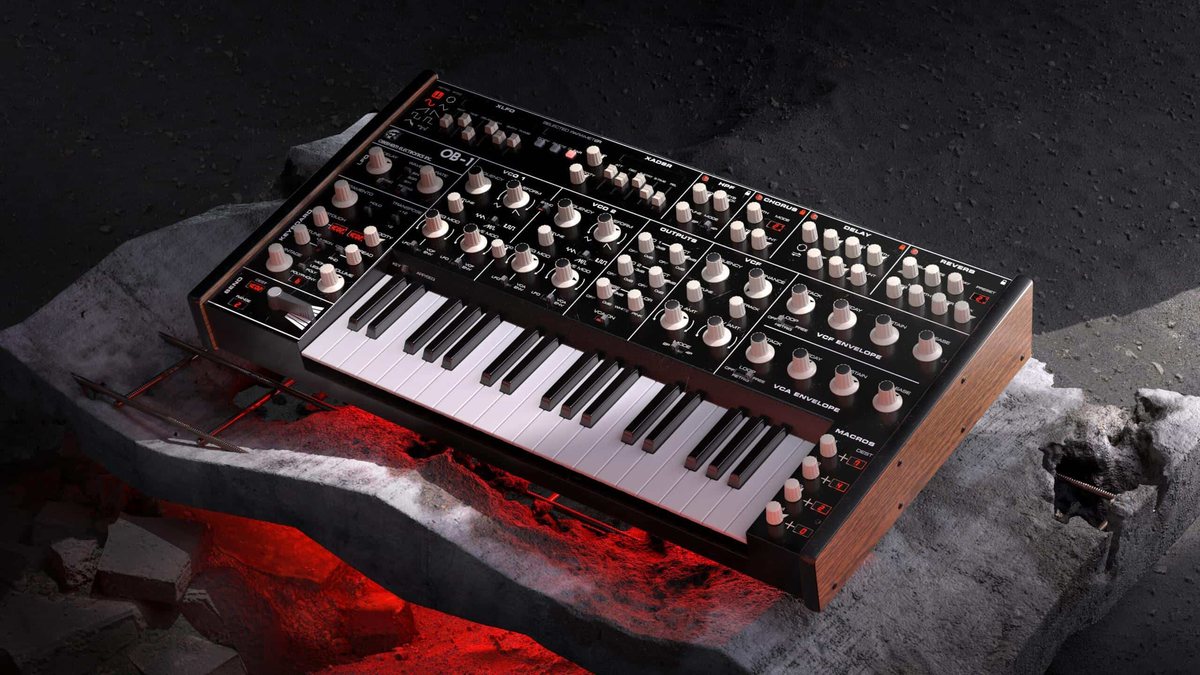
Oberheim OB-1 is a software synthesizer from GForce Software that recreates the 1978 hardware OB-1. The original is presented as one of the first monophonic synths that could store and recall sounds, and GForce says this version was developed in collaboration with Oberheim.
The hardware was monophonic, but this version offers up to 16 voices in poly mode, plus mono unison and legato. The filter switches between 2-pole and 4-pole, and the page highlights its strongly resonant character.
Additions beyond the original include a new waveform with waveshape modulation, hard sync, cross-modulation, a high-pass filter, a Vintage mode and pan spread. The X-Modifier system lets LFO and ADSR modulation be applied directly to almost every control.
It also has four macros, a 16-step sequencer and arpeggiator, chorus, delay and reverb, a tag-searchable preset browser, and more than 300 presets. A 14-day trial is available from the maker.
Key features
Polyphony and three voice modes
The hardware was monophonic; here you can choose poly (up to 16 voices), mono unison or legato. Note Pan modes add stereo width, and Hold allows hands-free drones.
Expanded oscillator and filter section
Additions include a new waveform with waveshape modulation, hard sync, cross-mod, separate levels for oscillators, sub and noise, noise colour, LFO sync and retrigger, envelope looping and key tracking. Beyond the 2- or 4-pole filter there is a high-pass filter with keyboard tracking.
X-Modifier
X-LFO and X-ADSR are pre-wired to almost every parameter. Click a control and set an amount to apply modulation, which reduces patching effort when you want complex movement.
Four macros and a sequencer
There are four macros, and Macro 4 has its own sequencer track. The 16-step sequencer has independent step lengths for pitch, velocity and Macro 4, plus probability, scale, random and other play modes.
Three effects
Chorus, stereo delay and matrix reverb are built in, each switched by its own LED. They can be locked so the space setting stays when you change presets. An arpeggiator is also included.
Preset browser and 300+ patches
A browser with tagging, sorting and search covers more than 300 presets by sound designers including Zardonic, Alex Jann and Jogging House. The interface can be freely resized.
Playing expression
Velocity response is programmable and polyphonic aftertouch is supported, which helps if you want expression from your keyboard.
Specifications
| Item | Details |
|---|---|
| Type | Software synthesizer (recreation of the 1978 Oberheim OB-1) |
| Voices | Poly up to 16 / mono unison / legato |
| Filter | 2-pole or 4-pole, plus added high-pass |
| Sequencer | 16 steps (pitch, velocity, Macro 4) |
| Effects | Chorus, stereo delay, reverb |
| Presets | 300+ |
| Formats | Mac: standalone, AU, AAX, VST, VST3 / PC: standalone, AAX, VST, VST3 |
| OS | macOS 10.13 or later (Intel / Apple Silicon) / Windows 7 or later |
| PC minimum | 2 GHz CPU, 2 GB RAM |
| Trial | 14 days (installer about 34 MB) |
| License | One-time purchase, no subscription |
What is included and system requirements
- Oberheim OB-1 instrument (plug-ins and standalone)
- 300+ presets
- Preset browser
- A 14-day trial is offered by the maker
Where it may come in handy
Bass and leads
The maker names basslines and leads as uses; unison and the strongly resonant filter may help in making thick basses or leads.
Techno and electro production
Building repeating phrases with the sequencer and arpeggiator and adding variation with macro movement may suit this style.
Adding vintage-style tones
The Vintage mode and built-in chorus may help add older analog-style character to a track.
Who it may suit
- People who want to try a classic Oberheim synth in software
- People building moving sounds with sequencing and modulation
- People looking for a polyphonic analog-style synth
- People who prefer a one-time purchase
Good to know before you buy
- The official trial lasts 14 days.
- The Windows version has no AudioUnit format.
- Many features are added beyond the hardware, so it is not a strict copy.
- The price shown is the regular price; the maker's store may show a sale price.
How it differs from similar products
We do not pick a winner; the official figures are placed side by side.
TAL-Pha
OB-1 offers up to 16 voices and 300+ presets, while TAL-Pha has unison of up to seven voices and 380+ presets. OB-1 recreates a 1978 Oberheim mono synth; TAL-Pha recreates the 1980s Alpha Juno II.
Price
$119.99 (GForce Software official site, checked 2026-10-27). Prices can vary by region and promotion, so check the official page before buying.
See Oberheim OB-1 on the product page
More of the same kind
We have introduced 178 synthesizers. Here are some of the others.
- Dawesome Tracktion Dawesome Abyss II
- Cherry Audio GX-80
- Arturia OP-Xa V
- AudioThing miniBit
- Arturia Jun-6 V
- Eventide Generate
We have introduced 12 other products from GForce Software.
- GForce Software AXXESS
- GForce Software MAP
- GForce Software Halogen FM
- GForce Software Oberheim OB-E
- GForce Software Oddity3
For a side-by-side comparison scored on the same criteria, see our comparison of synthesizers.
See the full list in Product database: Instruments.
Sources: gforcesoftware.com pluginboutique.com (checked 2026-10-27)










Comments