
Disclosure: This page may contain affiliate links. Prices were checked on the date shown and may change.
An introduction to AKG C114, based on information from the maker and distributors: what it does, how to use it and who it may suit. It is not scored.
With high headroom, low noise, and a crisp, detailed sound, the AKG C114 multi-pattern condenser is ideal for music recording and content creation.
— AKG official site
What is C114?
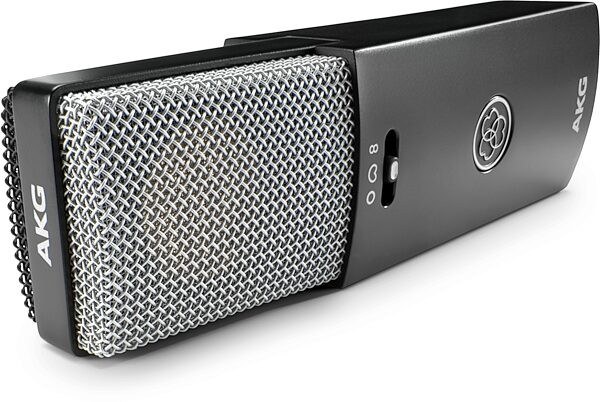
The AKG C114 is a large-diaphragm condenser microphone with selectable polar patterns. A condenser microphone uses electrical power to capture fine detail, and it needs phantom power, a 48 V supply sent from a mixer or audio interface. Retailer pages describe it as a microphone for music recording and content creation.
Its capsule is a 26 mm dual-diaphragm design with an edge-terminated diaphragm, modelled on the approach of AKG's well-known C12 and C414. It offers cardioid, omnidirectional and figure-8 patterns, and the circuit is described as a transformerless FET design.
It is aimed at musicians, podcasters, YouTubers and streamers, and for vocals, instruments, voice-over and broadcast work. The listed maximum SPL is 145 dB (0.5% THD) and self noise is 12 dB SPL (A-weighted), which is described as handling everything from loud sources to quiet voices.
The body is described as using 100% recycled PIR metals and alloys, and the accessories and packaging are described as designed to be recyclable. An H84 shockmount is included and the manufacturer warranty is two years.
26 mm edge-terminated capsule
A 26 mm dual-diaphragm capsule modelled on the C12 and C414 designs. It uses a gold-sputtered diaphragm and is described as aiming for a smooth top end and a balanced frequency response.
Three polar patterns
You can choose cardioid (mainly the front), omnidirectional (all directions) or figure-8 (front and back). That lets you include room sound, record two people facing each other, or use it as part of a stereo technique.
High maximum SPL, low noise
Maximum SPL is 145 dB (0.5% THD), self noise is 12 dB SPL (A-weighted) and signal-to-noise ratio is 82 dB (re 1 Pa). It is described as handling loud sources such as guitar amps and drums as well as whispers.
Transformerless FET circuit
A transformerless FET circuit aimed at low noise and wide dynamic range. Output impedance is 200 ohms or less and the recommended load impedance is 1,000 ohms or more.
Standard XLR output and shockmount
The output is a standard 3-pin XLR. The H84 shockmount is included to reduce vibration and noise from the stand. Phantom power is 48 V plus or minus 4 V with current consumption of 5 mA or less.
Recycled-metal body
The body uses 100% recycled PIR metals and alloys, and accessories and packaging are described as recyclable. Durability is described as meeting professional standards.
Specifications
| Item | Details |
|---|---|
| Type | Large-diaphragm condenser microphone |
| Capsule | 26 mm, dual-diaphragm, edge-terminated, pressure-gradient |
| Polar patterns | Cardioid, omnidirectional, figure-8 |
| Frequency response | 20 Hz to 20 kHz |
| Sensitivity | 13.5 mV/Pa (-37.4 dBV, cardioid) |
| Maximum SPL | 145 dB SPL (0.5% THD) |
| Self noise | 12 dB SPL (A-weighted) |
| Signal-to-noise ratio | 82 dB (re 1 Pa) |
| Output impedance | 200 ohms or less |
| Recommended load impedance | 1,000 ohms or more |
| Phantom power | 48 V plus or minus 4 V (IEC 61938), 5 mA or less |
| Connector | 3-pin XLR |
| Warranty | Two years |
What is included and system requirements
- C114 microphone
- H84 shockmount
- Quick start guide
- What you also need: a mixer or audio interface that supplies 48 V phantom power, an XLR cable and a mic stand
How to use it
- Attach the shockmount to a mic stand and mount the C114 in it.
- Connect the microphone to the mic input of an audio interface or mixer with an XLR cable.
- Turn on 48 V phantom power at the interface. Make sure it is off while you connect the cable.
- Choose cardioid, omnidirectional or figure-8 with the polar-pattern switch.
- Place the microphone at a suitable distance from the voice or source, and set a pop filter in between if you use one.
- Adjust the input gain so that even the loudest part does not hit the red peak indicator.
- Monitor on headphones while you record and change the position or pattern if needed.
Vocals and voice-over
Cardioid may suit recording a single voice. Podcasts and streaming voice are use cases named on retailer pages.
Acoustic instruments and guitar amps
The high maximum SPL suggests it may cope with loud sources such as guitar amps and percussion.
Recordings that include the room
Omnidirectional or figure-8 may let you capture some of the room sound along with the source.
Two-person conversations
With figure-8, one microphone could pick up two people sitting at its front and back.
Who it may suit
- People with an interface that supplies phantom power who want a first condenser microphone
- People who want one microphone for vocals, instruments, voice-over and streaming
- People who want to try different recording approaches with switchable patterns
Good to know before you buy
- It requires 48 V phantom power and will not work from an input that does not supply it.
- A mic stand, an XLR cable and a pop filter are needed separately (the shockmount is included).
- This article is based on retailer product pages. The maker's own site does not accept automated access, so check retailer or maker pages for the latest specifications.
Price
Please check the official page for the price.
More of the same kind
We have introduced 100 microphones. Here are some of the others.
- Shure MoveMic One / Two
- Behringer XM8500
- FIFINE K669B
- Earthworks SR25
- Logicool G Blue Microphones Yeti Nano
- Radius RM-ATZ19
We have introduced 3 other products from AKG.
For a side-by-side comparison scored on the same criteria, see our comparison of microphones.
See the full list in Product database: Microphones and accessories.
Sources: zzounds.com guitarcenter.com (checked 2026-11-09)









Comments