
Disclosure: This page may contain affiliate links. Prices were checked on the date shown and may change.
An introduction to Audio-Technica AT4060a, based on information from the maker and distributors: what it does, how to use it and who it may suit. It is not scored.
Audio-Technica's AT4060a cardioid vacuum tube condenser brings the warmth of vintage tube sound to every shade of the SPL spectrum.
— Audio-Technica official site
What is AT4060a?
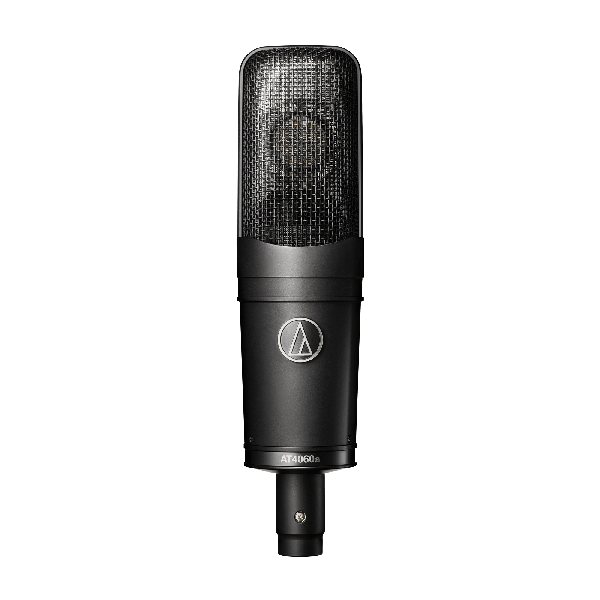
The AT4060a is a cardioid vacuum tube condenser microphone in Audio-Technica's 40 Series. The maker says it brings the warmth of vintage tube sound across a wide range of sound pressure levels. It is used together with a dedicated power supply unit.
According to the official description, its dynamic range far exceeds that of other tube microphones, so it can capture the subtle nuances of vocals and instruments as well as extreme levels such as guitar cabinets. Each hand-selected tube is individually tested and aged.
Audio-Technica states that every unit is individually tested and inspected for 100 percent quality assurance, and describes the microphone as combining vintage sound, rock-solid reliability and versatility for studio and live use.
The diaphragms are 2-micron-thick vapor-deposited gold, put through a five-step aging process. A large coupling transformer supports low-frequency linearity, and power comes from the included AT8560a unit. Phantom power is not used.
Key features
Hand-selected tubes
Each tube is picked, tested and aged individually, then used in a uniquely configured circuit, aiming to balance tube character with demanding specifications.
Wide dynamic range, high max SPL
Maximum input is 150 dB SPL (1% THD) and typical dynamic range is 131 dB. That leaves headroom from whispered vocals to loud guitar amps.
Dual-diaphragm cardioid
The dual-diaphragm capsule keeps the polar pattern precise across the full frequency range. The cardioid pattern favors sound from the front, helping reduce feedback and unwanted pickup.
Vapor-deposited gold diaphragms
The 2-micron gold diaphragms go through five-step aging so that their optimum characteristics stay consistent over years, according to the maker.
Low-noise power design
Regulated and heavily filtered heater current prevents noise from contaminating the signal path. The power unit has a ground-lift switch to remove hum from ground loops.
Large transformer and brass baffle
A large coupling transformer provides low-frequency linearity, and a precision-machined nickel-plated brass baffle supports element stability and sensitivity.
Shock mount and case included
A custom AT8447 shock mount, rack-mount adapters and a protective carrying case are included. The mount fits 5/8-inch 27-thread stands.
Specifications
| Item | Details |
|---|---|
| Element | Externally polarized (DC bias) condenser |
| Polar pattern | Cardioid |
| Frequency response | 20 to 20,000 Hz |
| Open circuit sensitivity | -34 dB (19.9 mV) re 1 V at 1 Pa |
| Impedance | 200 ohms |
| Max input sound level | 150 dB SPL (1 kHz, 1% THD) / 149 dB SPL (0.5% THD) |
| Noise | 19 dB SPL |
| Dynamic range (typical) | 131 dB, 1 kHz at max SPL |
| Signal-to-noise ratio | 75 dB, 1 kHz at 1 Pa |
| Power requirements | AT8560a power unit (100-240 V AC; 120 V AC for USA/Canada) |
| Weight | Microphone 645 g / power unit 1.3 kg |
| Dimensions | Microphone 215.0 mm long, 53.4 mm max diameter |
| Output connector | 3-pin XLRM (on the power unit) |
| Cable | 7.6 m cable with 6-pin XLR-type connectors between microphone and power unit |
What is included and system requirements
- AT4060a microphone
- AT8560a tube microphone powering unit
- AT8447 shock mount
- 7.6 m 6-pin XLR-type cable (microphone to power unit)
- AC power cable
- Rack-mount adapters for the power unit
- Protective carrying case
How to use it
- Make sure the AT8560a power unit is switched off.
- Plug the female end of the included 6-pin cable into the microphone and the male end into the power unit.
- Connect the power unit's output to your mixer or audio interface with a 3-pin XLR cable (not included).
- Do not turn on phantom power.
- Plug the AC cable into the wall outlet and switch the power unit on.
- Allow at least 15 minutes of warm-up so the electronics can stabilize.
- Aim the front side with the raised emblem at the source, and secure the cable to the stand with a slack loop.
Where it may come in handy
Vocal recording
Its wide dynamic range might let one mic handle everything from whispers to shouts, and it is an option for those wanting to use a tube mic.
Guitar cabinets
With up to 150 dB SPL of headroom, it might also suit loud guitar amplifiers.
Narration and radio
The cardioid pattern focuses on the front, which may suit voice recording where you want to limit surrounding sound.
Acoustic instruments
Since it is said to capture subtle nuance, it might also be used for acoustic instruments.
Who it may suit
- People who want to record vocals or instruments with a tube mic
- Studio users who want to cover both loud and delicate sources
- People with a serious recording setup where a dedicated power unit fits
- People wanting to try a mic that uses its own power supply rather than phantom power
Good to know before you buy
- It does not use phantom power; the included power unit is required.
- At least 15 minutes of warm-up is needed before use.
- The power unit weighs about 1.3 kg and the microphone about 645 g.
- Always switch the power unit off when connecting or disconnecting cables.
Price
$1,859 (Audio-Technica official site, checked 2026-10-27). Prices can vary by region and promotion, so check the official page before buying.
See AT4060a on the product page
More of the same kind
We have introduced 100 microphones. Here are some of the others.
We have introduced 4 other products from Audio-Technica.
- Audio-Technica AT875R
- Audio-Technica AT2020USB-X
- Audio-Technica ATH-M20xSTS
- Audio-Technica ATH-R70xa
For a side-by-side comparison scored on the same criteria, see our comparison of microphones.
See the full list in Product database: Microphones and accessories.
Sources: audio-technica.com docs.audio-technica.com fujiya-camera.co.jp (checked 2026-10-27)









Comments