
An audio interface is equipment that brings the sound of microphones and instruments into the computer and sends the computer’s sound out to headphones and speakers. This page compares audio interfaces using manufacturer-published specifications and gives each a rank.
The scores are five criteria: microphone input quality (quietness, gain and dynamic range), ease of streaming (loopback), ease of recording guitar and other instruments (Hi-Z inputs), number of inputs and outputs, and features for production. Price is not part of the score.
This list compares 23 audio interfaces on 5 criteria: microphone input quality, ease of streaming, ease of recording guitar and other instruments, number of inputs and outputs, features for production. Scores are decided by how well each product serves its purpose, using the conditions for each criterion, and the basis is official manufacturer information. Price is not part of the score.
Disclosure: This page contains affiliate links. If you buy through them, SoundBounty may earn a commission at no extra cost to you. Prices are as of the date checked and can change.
Picks by purpose
For each criterion, we list the models with the highest score in this comparison (up to three, in order of overall score when several tie).
- For people who want to record singing and narration cleanly with little noise: Babyface Pro FS (rank S). Top score (5 points) for “microphone input quality”.
- For people who want to stream the computer’s sound (BGM and game sound) together with a microphone: Babyface Pro FS (rank S), M6 (rank S), MiniFuse 4 (rank S). Top score (5 points) for “ease of streaming”.
- For people who want to plug in a guitar or bass directly: M6 (rank S), MiniFuse 4 (rank S). Top score (5 points) for “ease of recording guitar and other instruments”.
- For people who want to record several microphones and instruments at once: Babyface Pro FS (rank S), M6 (rank S), MiniFuse 4 (rank S). Top score (5 points) for “number of inputs and outputs”.
- For people who want to connect MIDI gear and external equipment for serious production: Babyface Pro FS (rank S). Top score (5 points) for “features for production”.
Tier list by rank
Ranks are based on the manufacturer's official features and specifications, not on sound quality. Within a row, products are ordered by score. The basis is explained in How we rate specifications.
Tier table by criterion
Products with the same overall rank can have different strengths. Click a column heading to sort by the rank on that criterion, and use it when you choose by the feature you want.
| Product | Overall | Microphone input qualityQuietness (EIN), gain range and dynamic range | Ease of streamingLoopback (send the computer's sound together with the microphone for streaming or recording) | Ease of recording guitar and other instrumentsNumber of inputs that take a guitar or bass directly (Hi-Z) | Number of inputs and outputsAnalog inputs plus outputs (headphones excluded) | Features for productionBuilt-in DSP, MIDI ports and digital I/O |
|---|---|---|---|---|---|---|
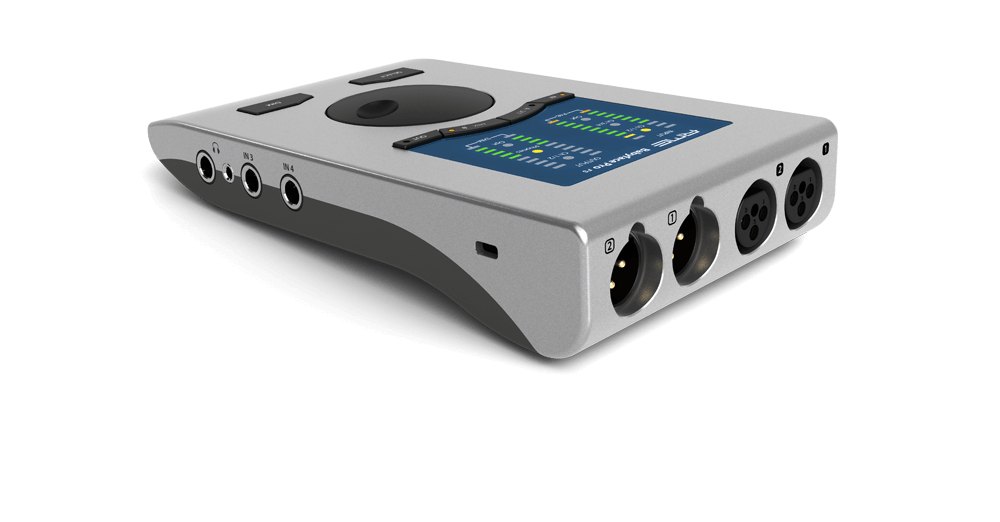 RMEBabyface Pro FS | S4.8 | SGain 76dB / DR 117dB | S1 | A2 | S8 | S3 |
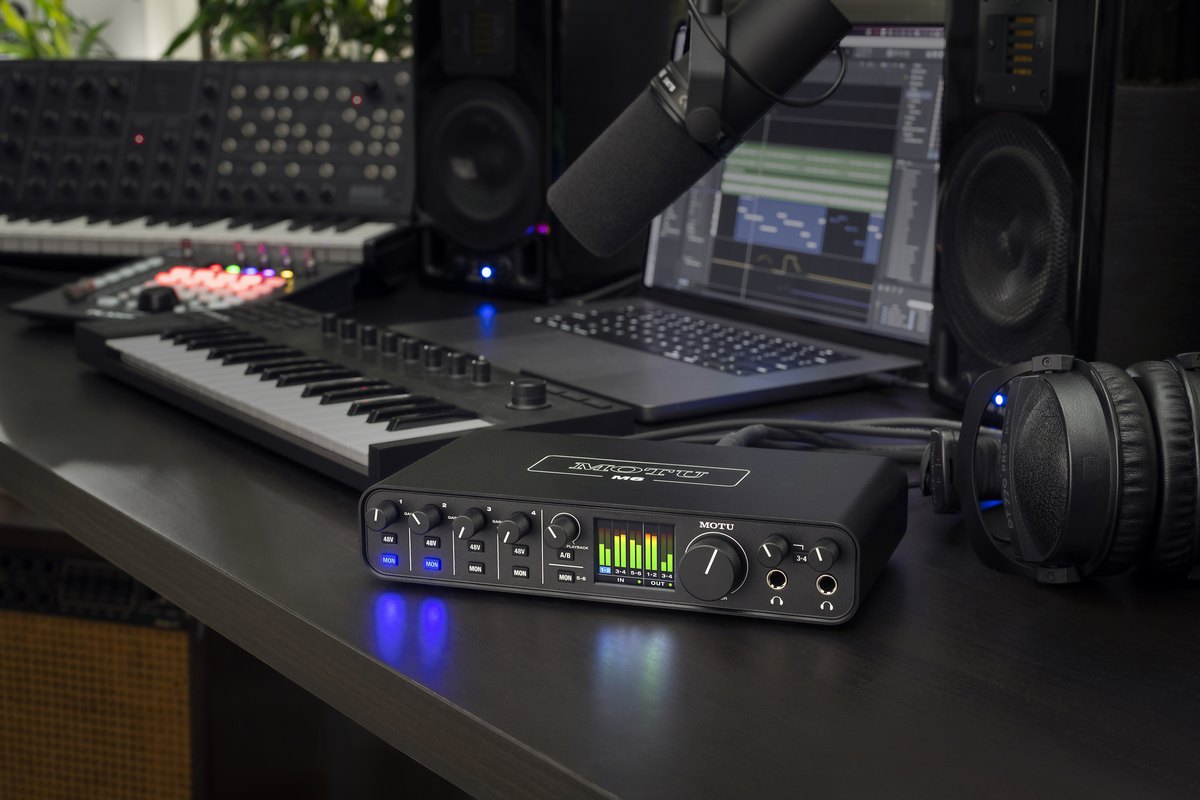 MOTUM6 | S4.4 | AEIN -129dBu / DR 115dB | S1 | S4 | S10 | B1 |
| ArturiaMiniFuse 4 | S4.2 | BEIN -129dBu / Gain 56dB / DR 110dB | S1 | S4 | S8 | B1 |
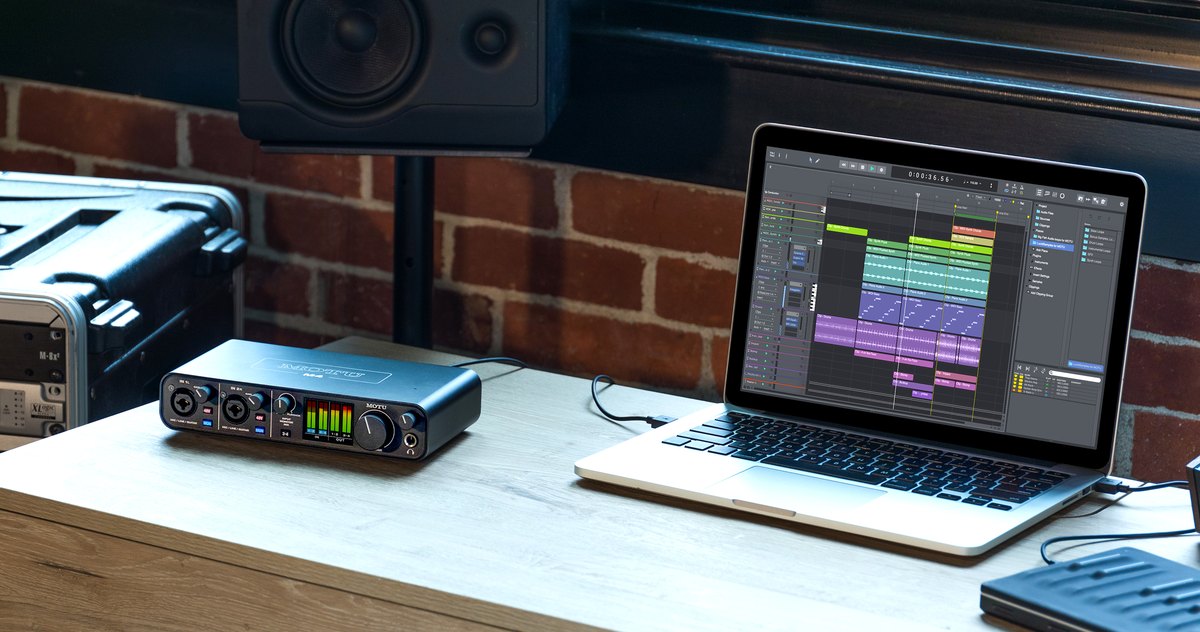 MOTUM4 | S4.2 | AEIN -129dBu / DR 115dB | S1 | A2 | S8 | B1 |
| FocusriteScarlett 4i4 4th | A4.0 | BEIN -127dBu / Gain 69dB / DR 116dB | S1 | A2 | S8 | B1 |
| AudientiD14 MKII | A4.0 | AEIN -129dBu / Gain 58dB | S1 | B1 | A6 | A2 |
| Solid State LogicSSL 2+ MKII | A4.0 | AEIN -130.5dBu / Gain 64dB / DR 116.5dB | S1 | A2 | A6 | B1 |
| MOTUM2 | A3.8 | AEIN -129dBu / DR 115dB | S1 | A2 | B4 | B1 |
| ArturiaMiniFuse 2 | A3.6 | BEIN -129dBu / Gain 56dB / DR 110dB | S1 | A2 | B4 | B1 |
| AudientiD4 MKII | A3.6 | AEIN -129dBu / Gain 58dB | S1 | B1 | B4 | B1 |
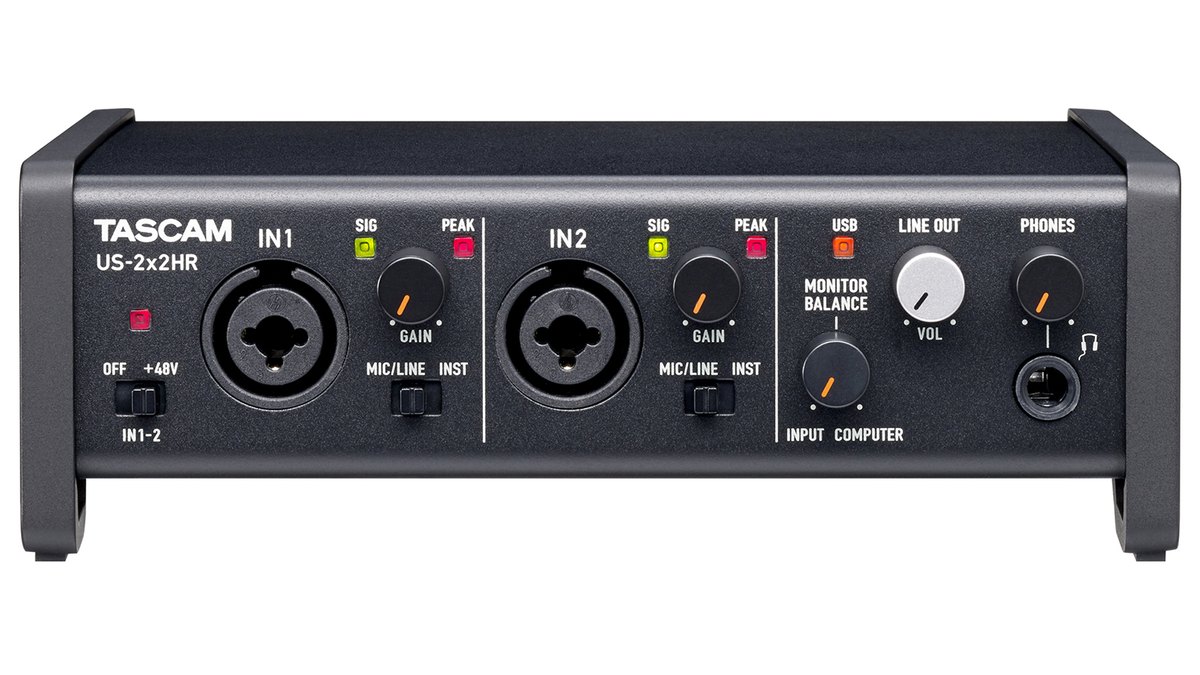 TASCAMUS-2x2HR | A3.6 | BEIN -128dBu / Gain 56dB | S1 | A2 | B4 | B1 |
| Solid State LogicSSL 2 MKII | A3.4 | AEIN -130.5dBu / Gain 64dB / DR 116.5dB | S1 | A2 | B4 | C0 |
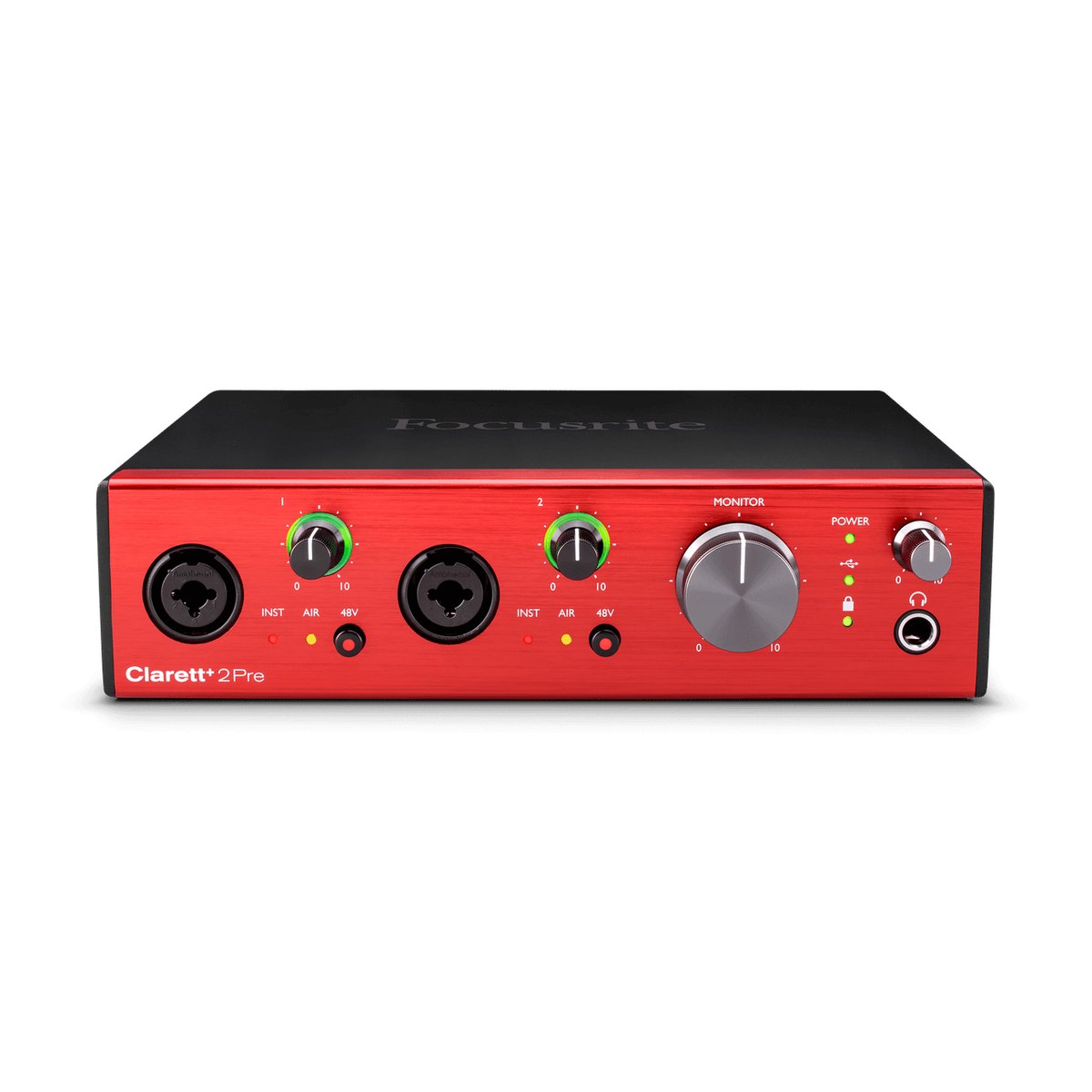 FocusriteClarett+ 2Pre | A3.4 | AEIN -129dBu / Gain 57dB / DR 118dB | C0 | A2 | A6 | A2 |
| FocusriteScarlett 2i2 4th | B3.2 | BEIN -127dBu / Gain 69dB / DR 116dB | S1 | A2 | B4 | C0 |
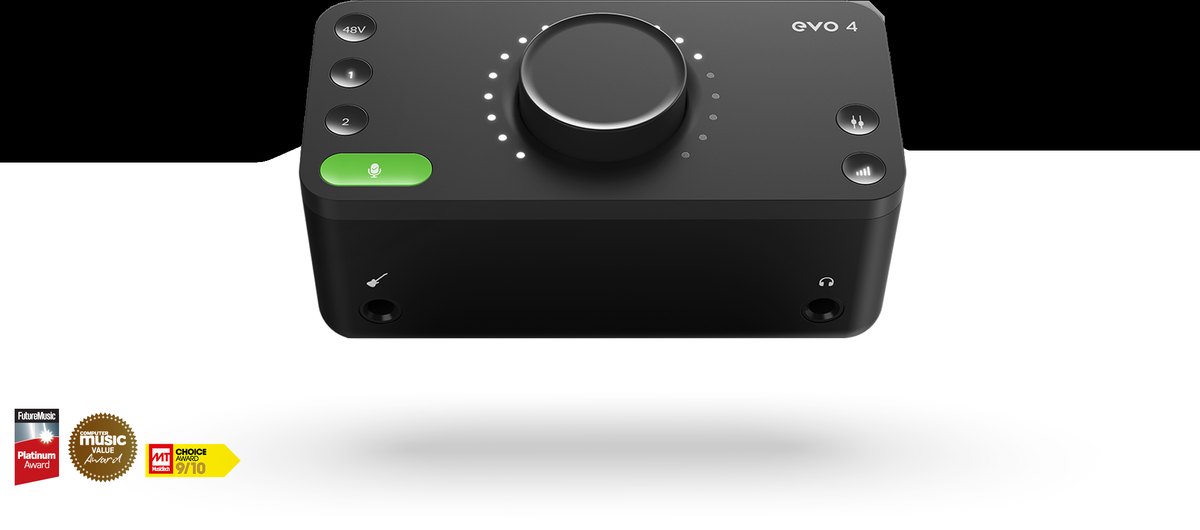 AudientEVO 4 | B3.2 | BEIN -128dBu / Gain 58dB / DR 113dB | S1 | A2 | B4 | C0 |
| FocusriteScarlett Solo 4th | B3.0 | BEIN -127dBu / Gain 57dB / DR 113dB | S1 | B1 | B4 | C0 |
| ArturiaMiniFuse 1 | B2.8 | BEIN -129dBu / Gain 56dB / DR 110dB | S1 | B1 | C3 | C0 |
| Universal AudioVolt 2 | B2.6 | CEIN -127dBu / Gain 55dB / DR 112dB | C0 | A2 | B4 | B1 |
| Universal AudioVolt 276 | B2.6 | CEIN -127dBu / Gain 55dB / DR 112dB | C0 | A2 | B4 | B1 |
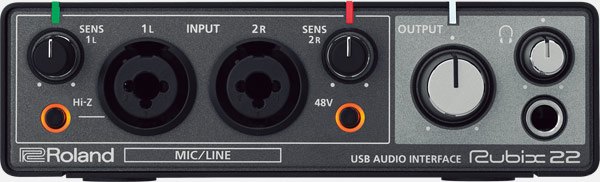 RolandRubix22 | C2.5 | — | C0 | B1 | B4 | B1 |
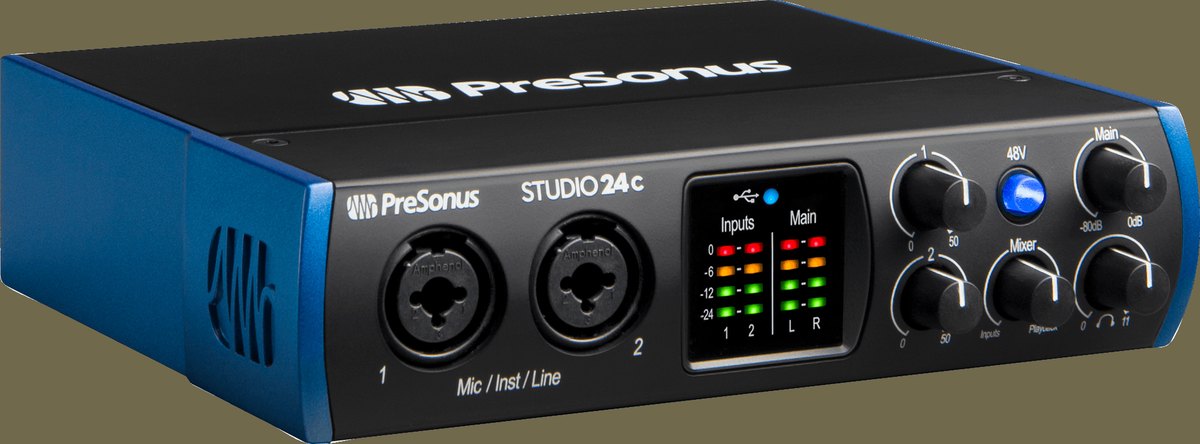 PreSonusStudio 24c | C2.4 | CEIN -126dBu / Gain 50dB / DR 106dB | C0 | A2 | B4 | B1 |
| Universal AudioVolt 1 | C2.2 | CEIN -127dBu / Gain 55dB / DR 112dB | C0 | B1 | C3 | B1 |
| Universal AudioVolt 176 | C2.2 | CEIN -127dBu / Gain 55dB / DR 112dB | C0 | B1 | C3 | B1 |
Click a column heading to sort by that criterion (click again to reverse). Each cell shows the score (1 to 5) on that criterion as 5 = S, 4 = A, 3 = B, 2 or lower = C. A dash means the criterion is not scored. This is a rating of the manufacturer's official features and specifications, not of sound quality. See How we rate specifications.
How to choose an audio interface
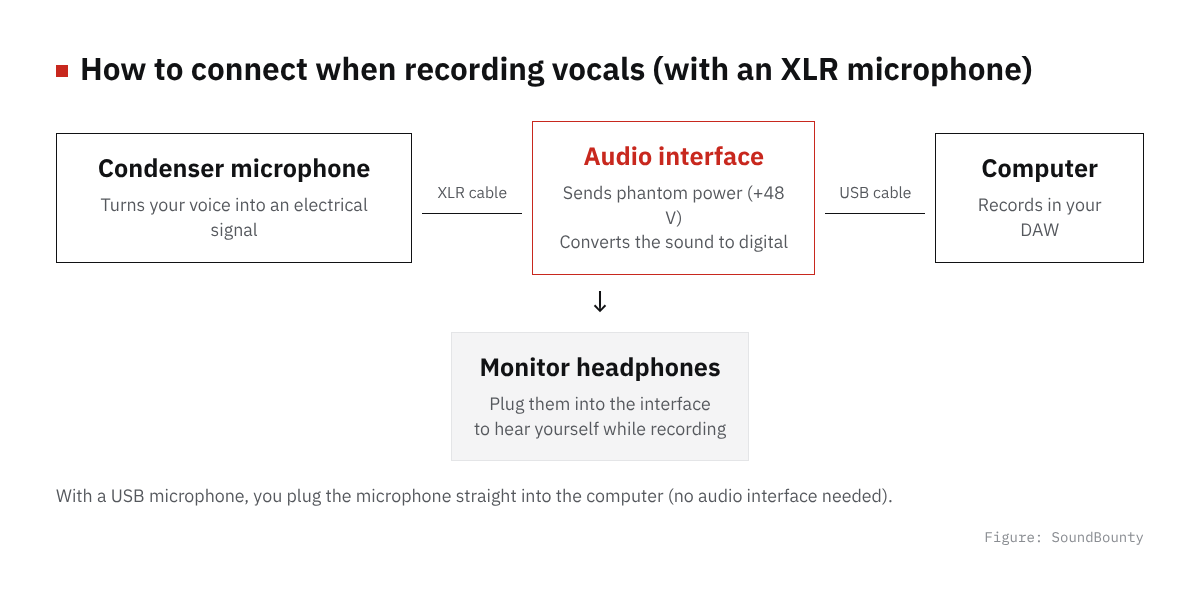
Figure: SoundBounty
Number of inputs
For cover songs and narration alone, a model with one microphone input is enough. If the number you record at once grows, such as recording guitar and vocals together or recording two people, choose a model with two or more inputs.
Loopback (for streaming)
Loopback is a function that mixes the computer’s sound and the microphone’s sound and sends them to streaming software. If you do karaoke-style streams or stream while playing a backing track, a model with loopback is handy.
If you record guitar or bass
To plug in a guitar or bass directly, you need a Hi-Z (instrument) input. If you record guitar and vocals together, choose a model that can use a Hi-Z input and a microphone input at the same time.
Quietness and gain of the microphone preamp
The quietness of the microphone preamp (the circuit that boosts the microphone’s sound), called EIN, and how much it can boost (gain) make a difference when you use quiet voices or low-sensitivity microphones. If you plan to use a dynamic microphone, a model with large gain is reassuring.
Connection and bundled software
Models that connect by USB-C are the mainstream. Some include a DAW (recording software) or plug-ins, so if you are just starting, check the bundled software too. Accessories are not part of the score.
A word on each product
Babyface Pro FS (rank S)
RME’s Babyface Pro FS is a USB audio interface with 4 inputs and 4 outputs.
M6 (rank S)
MOTU’s M6 is a USB audio interface with 6 inputs and 4 outputs.
M4 (rank S)
MOTU’s M4 is a USB audio interface with 4 inputs and 4 outputs.
US-2x2HR (rank A)
TASCAM’s US-2x2HR is a USB audio interface with 2 inputs and 2 outputs.
Clarett+ 2Pre (rank A)
Focusrite’s Clarett+ 2Pre is a USB audio interface with 2 inputs and 4 outputs.
EVO 4 (rank B)
Audient’s EVO 4 is a USB audio interface with 2 inputs and 2 outputs.
Rubix22 (rank C)
Roland’s Rubix22 is a USB audio interface with 2 inputs and 2 outputs.
Studio 24c (rank C)
PreSonus’s Studio 24c is a USB audio interface with 2 inputs and 2 outputs.
Frequently asked questions
Q. Do I not need an audio interface with a USB microphone?
You can record with a USB microphone alone. You need an audio interface if you use an XLR microphone, want to record instruments such as guitar too, or want better headphone sound.
Q. How is it different from a mixer?
Some streaming mixers also connect to a computer, but an audio interface is equipment that focuses on recording sound quality and low latency. If home recording is your main use, an audio interface suits you.
Q. Can I use it with a Mac?
Many of the models compared here support both Mac and Windows, but support differs by model. Check the maker’s compatibility table before you buy.
How we score
How we score (Audio interfaces)
| Criterion | Basis | 5 pt | 4 pt | 3 pt | 2 pt | 1 pt |
|---|---|---|---|---|---|---|
| Microphone input quality | Quietness (EIN), gain range and dynamic range | Average 4.5 or more | 3.5 or more | 2.5 or more | 1.5 or more | Under 1.5 |
| Ease of streaming | Loopback (send the computer's sound together with the microphone for streaming or recording) | Yes | — | — | — | No |
| Ease of recording guitar and other instruments | Number of inputs that take a guitar or bass directly (Hi-Z) | 3 or more | 2 | 1 | — | None |
| Number of inputs and outputs | Analog inputs plus outputs (headphones excluded) | ≥8 | ≥6 | ≥4 | ≥3 | <3 |
| Features for production | Built-in DSP, MIDI ports and digital I/O | All 3 | 2 | 1 | — | None |
Scored only on the body specifications published by the manufacturer and the functions listed on the product page. Price and bundled software are not part of the score. "Microphone input quality" is the average of three scores: quietness (EIN: 5 points at -130 dBu or lower, 4 at -129, 3 at -128, 2 at -127), gain range (5 at 72 dB or more, 4 at 65, 3 at 57, 2 at 54) and dynamic range (5 at 118 dB or more, 4 at 116, 3 at 112, 2 at 108). It is scored when two or more numbers are published. "Ease of streaming" depends on whether the interface has loopback, which sends the BGM or game sound playing on the computer to the streaming software together with your voice.
The thinking behind scores and ranks is summarized in How we rate specifications. We add products in order.