
Arturia’s soft synth “Memory V” was made available for download on May 26, 2026 (the date of the official press release). The official page presents it as software that recreates the big thickness and the three-oscillator structure of the 1982 polyphonic (able to play chords) synthesizer “Memorymoog”. Based on official information, this article introduces its features.
Disclosure: This article contains affiliate links. The content reflects the date we checked the maker’s official page (October 5, 2026).
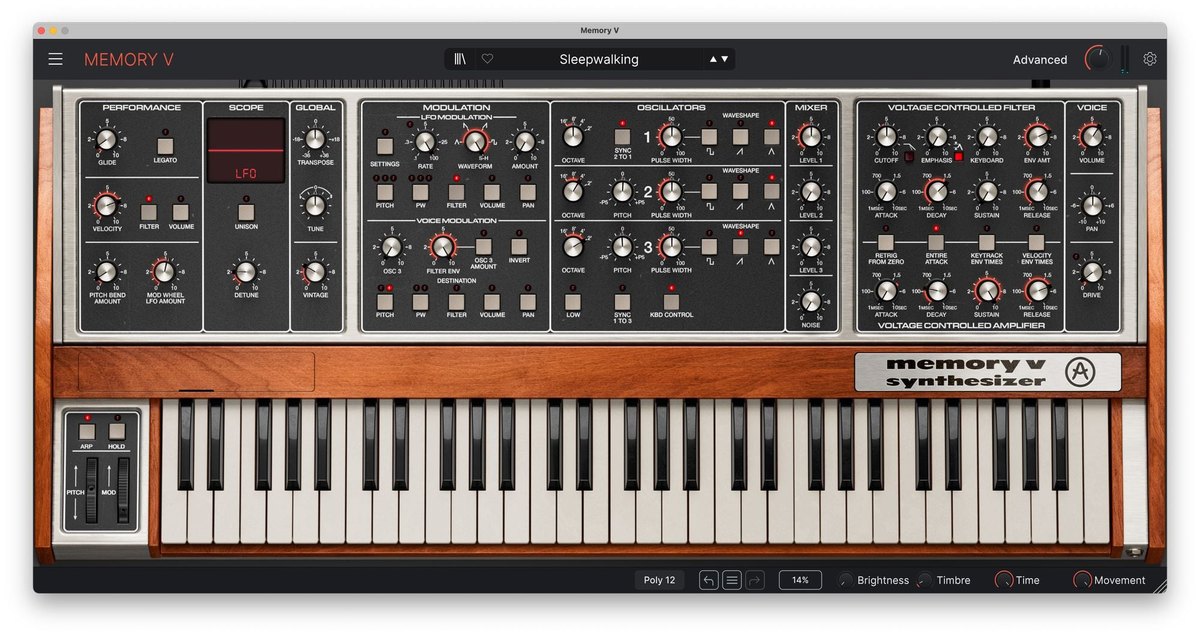
Image: from the Arturia official press material
Key points
- Memory V is a soft synth that models the 1982 Memorymoog at the component level (the official page explains this with Arturia’s own “TAE” technology).
- It uses three oscillators per voice and has a 24 dB ladder filter. You can switch to 12 dB.
- Besides the original six voices, it can be used with the twelve-voice “Poly 12”.
- It adds drag-and-drop modulation, a four-layer Multi-Arp and a four-slot FX rack that can hold more than 17 kinds of effects.
- More than 300 presets are included. The official page has a free demo.
What kind of software is it?
According to the official page, Memory V can make thick brass, heavy bass, evolving leads and cinematic pads with the “living instability” of the original unit and the depth of three oscillators. The official page says it brings the “rare” polyphonic synth sound of the original Memorymoog back to the modern studio.
The official page introduces uses in synthwave, modern electronic, ambient and R&B songs through demo tracks.
Features of the sound
Three oscillators and a ladder filter
Three oscillators run freely for each note. You can stack square, ramp and triangle waves, change the pulse width (the width of the square wave) and sync the oscillators to each other. The filter is a 24 dB low-pass ladder filter, with a switch to a 12 dB slope, self-oscillation, and “Bass Compensation”, which keeps the low end when you raise the resonance.
Vintage and Dispersion bring out the “taste of the original”
The Vintage and Dispersion knobs add the continuous pitch drift and note-to-note variation of the original unit. You can set the amount of variation for pitch, pulse width, level, cutoff, envelope times and more (per the manufacturer).
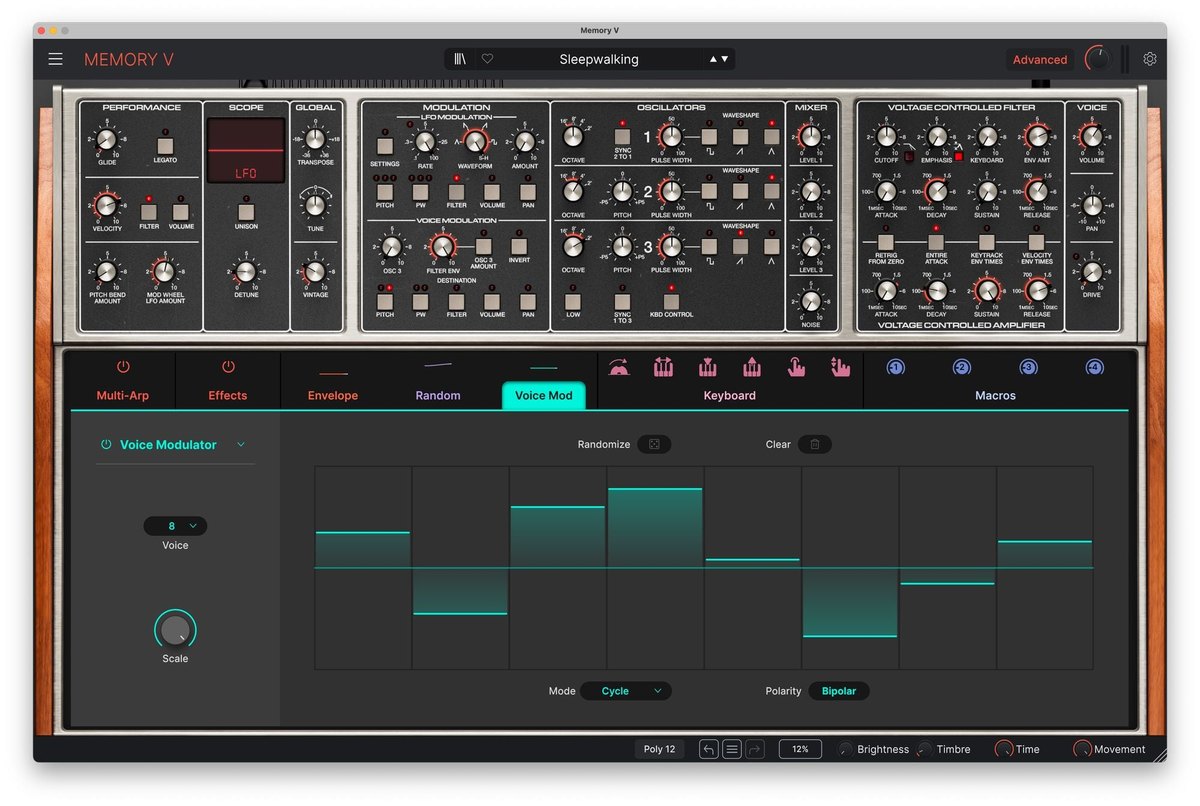
Image: from the Arturia official press material
Poly 12 and Unison
You can switch between the original six-voice structure and the twelve-voice “Poly 12”. Unison (stacking the same note), detune (a slight pitch offset) and stereo spread are also available.
Modern modulation, Multi-Arp and effects
There is drag-and-drop modulation, a four-layer “Multi-Arp” (an arpeggiator, a function that plays notes automatically in order), MPE support and a four-slot FX rack. The FX rack holds more than 17 kinds of effects, including tape echo, reverb, distortion and chorus (per the manufacturer).
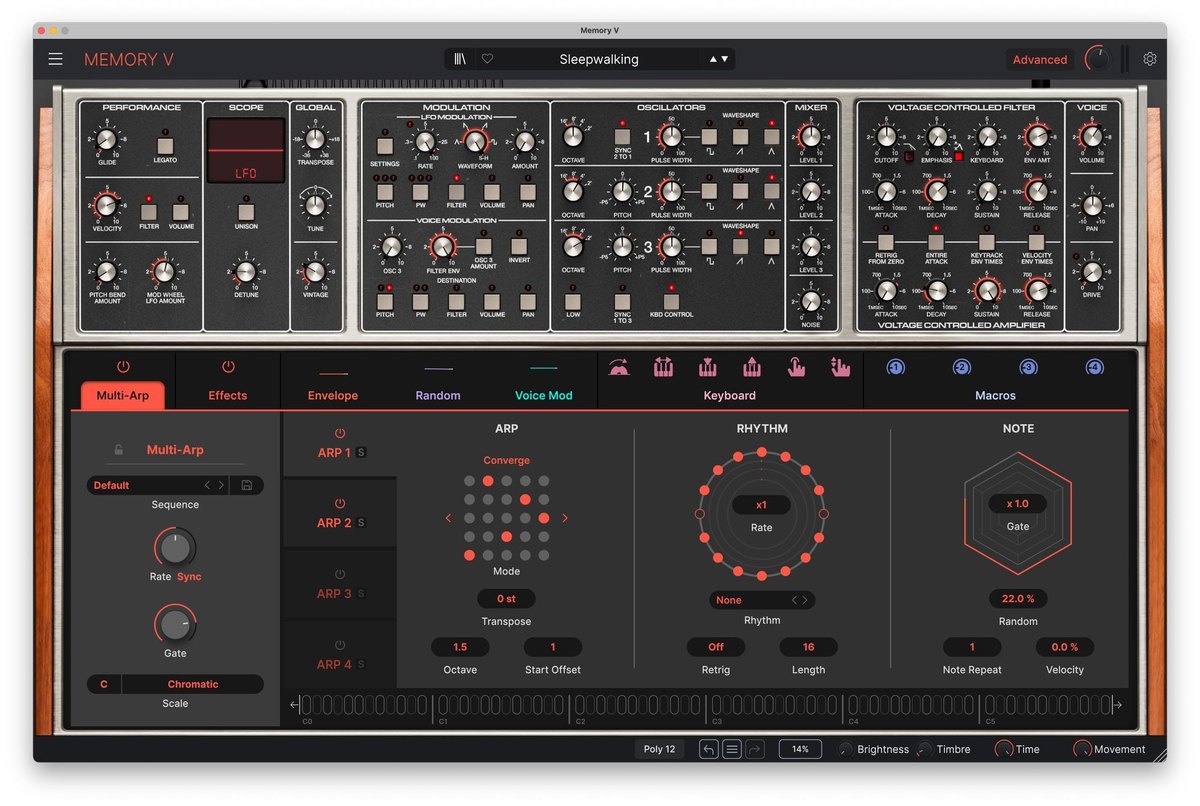
Image: from the Arturia official press material
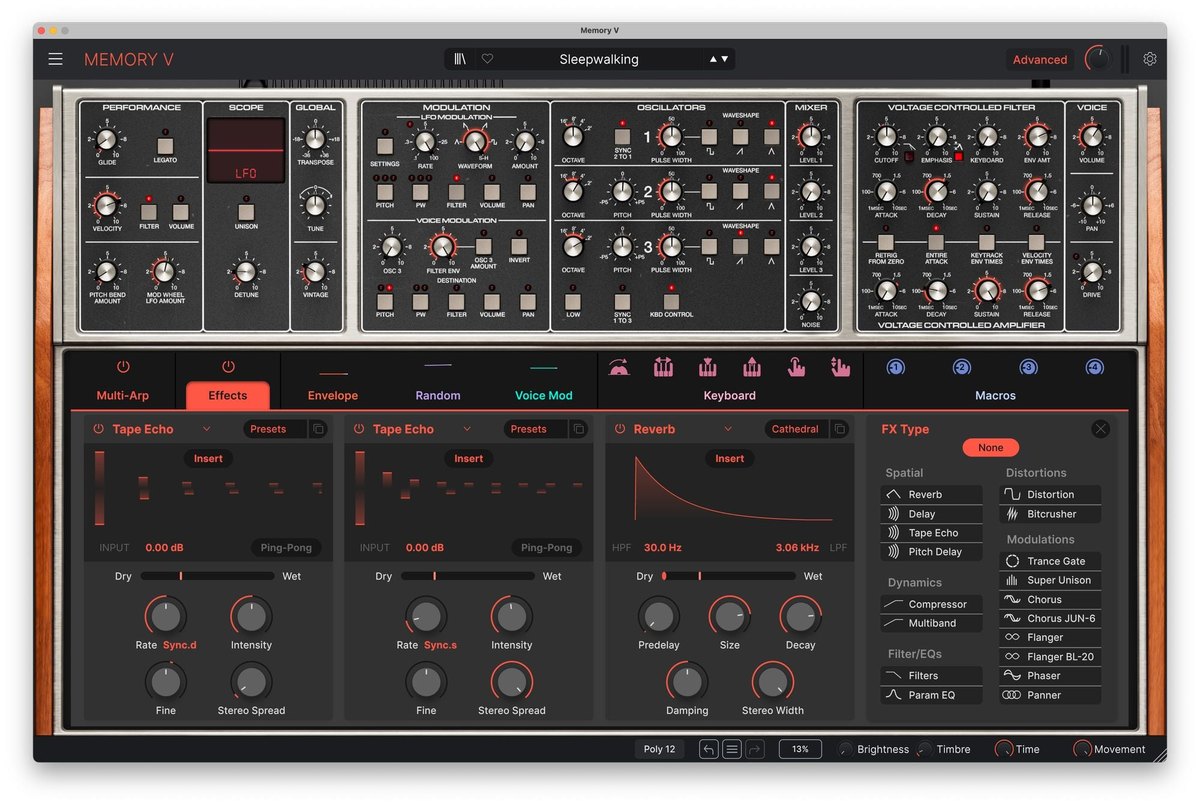
Image: from the Arturia official press material
More than 300 presets
More than 300 presets made by Arturia’s sound design team are included. The official page explains that they range from vintage brass, bass and keys to modern electronic sounds and cinematic pads.
Where it could fit in home recording
From here on, these are examples of use based on the official description.
- When you want to add a thick synth bass or pad to an original song: this is software for which the official page introduces how to make heavy bass and wide pads.
- When you want to make an 80s-style arpeggio or lead: Multi-Arp lets you layer several arpeggio movements.
- When you want to add synth thickness to the backing track of a cover: you could pick a close sound from the presets and adjust its balance in the mix.
Comparisons of synths overall are in synths compared.
What to check before you buy
- System requirements: the official download page says “Mac OS 11.0 or later” for Mac and “Windows 10 or later” for Windows. Check on the official page that it loads in the DAW you use.
- Try before you decide: the official product page has a “Get Free Demo” link.
- Special offers: the official page says there is a limited-time offer for Arturia users. Check the conditions on the official page.
Official page: Arturia “Memory V”

Comments